Masters of Umdaar – Bonus Content

Standard

PHEW! Mean a busy few weeks. In the last two weeks, I’ve closed a successful Kickstarter, moved to a new apartment, and had my first game, Masters of Umdaar, published by Evil Hat. I’m astounded by all of the great support I’ve had for all three of the above (especially the moving… those bookshelves are heavy.)

Art by Tazio Bettin & Enrica Eren Angiolini. Image owned by Evil Hat LLC, used without permission.

In all of the excitement, I haven’t had much time to write content this game blog. However, I’ve struck upon a great idea: I’ll share with the interwebs some of the bonus Umdaar material that didn’t make the final cut.

(I don’t want to call this the “Director’s Cut,” because that implies that the editorial staff of Evil Hat where viciously changing things against my approval; quite the opposite. Their critiques were constructive, and they made sure that they knew I was ultimately in charge of the product; they helped me to create one of the best works I’ve ever done. However, I had huge difficulty with keeping to the small page count, which meant there were many things that I wish we had space for.)

Enjoy the bonus material!

Tables of Tables

In the early drafts, one goal for “Umdaar” was to have an instant Unplanned Adventure. Players could spend 5 minutes on character creation, and the GM, with a slew of randomly generated names and monsters, could create a setting in less than 15 minutes. (An ambitious dream, I know.) However, it was decided to include more pre-made material (like the “Starblades of Su’ul” adventure), and to par down the GM material a bit. Thus, it’s no surprise that the bonus content is entirely tables.

NAME GENERATOR

A generator for creating random PC or NPC names. Foll 4dF twice, once for the prefix (top half), and once for the suffix (bottom half).

—- Naga-
Shiro- Vir-
Exa- Kan- Wego-
Moor- Zy- Thal- Kaji-
0 <row 1> Slee- Myr- Arco- Or- P’Taq-
0 + ++ +++ ++++
0 -Da -Ra -Thar -Daar -Ak
-Seez -Gon -Star -Caya
-Tron -Lock -Uu  
-T’zo -Kor      
—- -Graz        

NATION / BIOFORM SUFFIXES

During character creation, players are encouraged to create a name for their Bioform or their home nation. This can be done one of two ways:

Free-form – Create the name yourself, based on the bioform type. For example, if you are a “Manta” person, feel free to call your bioform the “Mantiards” or simply the “Mantamen.”

Name Generator – Use the Name chart above, but also roll for a random suffix from the Bioform Name Suffix Chart below, and add them together. Ex. Names “Arco” + “-T’zo”, plus the Bioform Suffix “-Ani” = the tribe of Arcot’zoani. (If the result is too long, just use the Name Prefix and the  Bioform Suffix, such Arcoani)

0 + ++ +++ ++++
0 -ocks -iards -en -ols -ri
-ors -ons -als -dja
-ani -ians -ites  
-ans -icans      
—- -um        

MASTER – TITLE GENERATOR

Use the Title Generator below to create the Master’s title. Alternatively, you can use the Name Creator from the character section, or put the two together—ex. NagTaal the Lifetaker.

Foll 4dF twice, once for the prefix (top half), and once for the suffix (bottom half).

—- Mask-        
Fear Hope      
Bone World Gold    
Life Skull Mind  Slave  
0 God Light Blood War Lore
   0 + ++ +++ ++++
0 King/ Queen Monger Tyrant Hoarder Berserker
 Lord Taker Grinder Twister  
-Lock Raker Crusher    
Razer Breaker      
—- Destroyer        

Note: Hope & Light?

On the chart above, it is possible to end up with titles like “Hopelord.” You can reroll, but we suggest you go with it- no doubt the Master is a charismatic leader, who is worshiped by his oppressed subjects as a demigod!

BASIC TERRAIN-ING

In the first few drafts, “Umdaar” was more about the geography- the artifacts were more of a by-product of exploring, rather than the motivation. Thus, there were also random tables for creating wild biomes, AKA the Wildlands (although they work for Dark Domains as well); likewise, there was also generators for Midway points, and for buried structures or evil lairs waiting for them- this was called the Final Destination.

WILDLAND GENERATOR

Foll 4dF twice, once for the prefix (top half), and once for the suffix (bottom half).

—- The Midnight
The Shrapnel The Bone
The Star The Sludge The Subterranean
The Blood The Crystal The Psycho The Sky
0 The Time The Poison The Fire The Ice The Sunken
0 + ++ +++ ++++
0 Ruins Caves Swamps Cliffs Sea
Forests Mountains Sands Highlands
Tundras Jungles Islands  
Oasis Plains      
—- Pass        

MIDWAYS

Going through a Wildland without any incident is boring. Thus, we had a Midway generator; they are intentionally generic, so they could be dressed up to match any location. Some of them provide obstacles, while others provide “window dressing” for a character conflict (rather than having a scene take place in a vacuum).

  0 +
The Crossroads – Where two paths intersect. A place of detours, losing your way, and highwaymen. The Fortification – A man-made barricade, a roadblock, or proper fort. You must deal with the defenders, or physically overcome it. The High Ground – Before you is higher ground, granting anyone on it a tactical advantage. Alternates: Dunes, Barrow Mounds.
0 The Ruins – A cluttered area, rife with hiding places, forgotten artifacts, and sleeping dangers. The Fertile Ground- A blooming place in a hostile land, and an ironic place to be threatened. I.e. oasis, watering hole, mushroom grove, hot spring. The Shelter – A small shelter stands, bowing under the weight of the elements. Perhaps a resilient occupant still resides there. I.e. A camp, covered wagon, shack, hovel.
+ The Pass – Before you lies a natural path or bridge that must be traversed if you are to proceed. I.e. across a gorge, river, through a reef, a mountain pass. The Fog – An area where the senses are dulled, and teams can easily become separated. I.e. a dark bog, a misty rainforest, a sandstorm, a smoky lava field. The Obstruction – A terrain feature that cannot simply be walked around it- takes active effort to overcome. I.e. swimming a lake, scaling a cliff-face, climbing the massive trees.

FINAL DESTINATION GENERATOR

Foll 4dF twice, once for the prefix (top half), and once for the suffix (bottom half).

—- The City        
The Temple The Labyrinth       
The Cathedral The Fortress The Forge    
The Prison The Crypts The Library The Castle  
0  The Factory The Pit The Tower The Dungeons The Coliseum
  0 + ++ +++ ++++
0 of the Fallen Goddess of Plague  of Cursed Wisdom of Despair of Eternal Life
of the Starfarers of Madness of Shadows of Mutation  
of the Nameless God of Screams of Torment    
of Gold of Forbidden Joy      
—- of Eternal War        

LAST BITS

The last worthy bit of content cut from Umdaar was the Adventure Generator, but that is long enough that it warrants a blog post of its own. Until then, readers, game on!

FATE ACCOMPLI KICKSTARTER: In the Home Stretch!

Standard

Just a reminder, we have less than a week left before the close of the Fate Accompli Kickstarter.  As of posting, we’re less than $500 away from the next stretch goal (rounded corners… ooooo!!)

Read the updates on our blog page, , or better yet, just go to the source!

FateAccompli_Now_on_KickStarter

Monster Showcase – The Exquisite Corpse

Standard

THE BACKSTORY

For this week’s Monster showcase, I wanted a monster that brought out one of Fate’s strengths: the written word. With Fate Core, words are more than a way of communicating information and categorizing one stat from another, they are the bricks and mortars upon which the game is founded.

I present you a comedy/supernatural monster, “The Exquisite Corpse.” It is named, of course, after the French surrealist party game from the 1920’s (also known as Consequences). In the game, players write down a word on a piece of paper, hide it, and pass the paper to the next player. This is continued until a complete but nonsensical sentence is formed. For example, one of the earliest recorded sentences, which gave the game its name, was “the exquisite corpse shall drink the new wine.”

THE CREATURE

Description: The exquisite corpse is an unusual undead being, consisting of several body parts stitched together dunstan creepyand reanimated through science or sorcery. It is a built for beauty rather than brute strength, and each part in the monster’s composition was carefully selected. If the handsome parts don’t quite match, this can result in a gait that is more jaunty than shambling.

High Concept: Miss-matched Charming Reanimat

  • +4  – Rapport
  • +3 – Fight, Physique
  • +2 – Provoke, Will, Notice
  • +1 – Deceive, Athletics, Contacts

Stress: 4 Physical, 3 Mental

Say What?: The Exquisite Corpse is a master of double-talk, providing pedantic answers or promises that, upon reflection, mean nothing. When others try to pry out answers and promises out of the corpse (with Provoke or Empathy), it may oppose with Rapport instead of Will; if the Corpse successfully resists, the inquisitor will mistakenly believe they have found the answer they were looking for until the end of the scene.

THE SET-UP

The Exquisite Corpse starts with only a High Concept, but will have other aspects added on to it. These additional aspects are written by the players in a random fashion. The framework for each aspect is:

The Exquisite corpse _adverb_ _verb_ the _adjective_ _noun_.

Assign each of the missing words (adverb, verb, adjective, noun) to a different player, and have them write it down where others can’t see.


If you’re looking for something to write your game notes on, why not try the Fate Accompli erasable note-cards? The Kickstarter’s fully-funded, and hitting stretch-goal after stretch-goal. It ends on August 20th, so make sure you check it out now!

FateAccompli_Now_on_KickStarter


After players have written their assigned words, compile them together. Depending on the number of players, it might be best to write four or five sentences, and pick the best three; look for sentences that tell you something about the corpse’s motivations and weaknesses. Here are a few samples (I promise, these are completely random):

The Exquisite corpse tensely instructs the sudden quilt
Interpretation: he is an informed figure that takes his jobs and his hobbies very seriously.

The Exquisite corpse widely tests the frantic peace
Interpretation: she is a troll, who loves to disrupt the status quo and to sabotage negotiations for everyone; or perhaps she is contracting you to disrupt a treaty.

The Exquisite corpse easily visits the robust toad – Interpretation: the corpse is a speedy individual, who knows where to find the toads you need as a potion ingredient.

The Exquisite corpse wetly covers the complete throat – Interpretation: the corpse is not a vampire, but is still obsessed with necking.

The Exquisite corpse swiftly punishes the stiff grade – Interpretation: I don’t know what this means, and I’m pretty sure I don’t want to know.

WHAT LIES BEYOND

After you have an idea of what the character is like, you may want to drop the randomness. However, there’s nothing to say that you can’t continue on in the adventure this same way. For example, the term “Exquisite Corpse” is sometimes used with Round Robin stories: one author will start a composition, but leave it unfinished, passing it on to the next. The later writers are allowed to read what has come before. For example, you can try this set-up:

The exquisite corpse sits down at your table and flashes you a mossy grin. “I have a job for you… well, it’s a three part job, but I think you can handle it. First, you will need …”

Each player must:

  1. Finish the previous sentence.
  2. Add a complete sentence of their own.
  3. Start a third sentence, but leave it unfinished.

WHY DO THIS?

I feel that players want to play. As I’ve theorized in the “Can You Picture That?” blog a few months ago, anything that is playful and creative gets players to flex their muscles, and to get them in the frame of mind that this is a story that they are creating, not reacting to. I have yet to try this specific style myself, but am anxious to (I suspect it might be a fun side adventure in the latest Fate World setting, “Nest.”) If you try it out, tell us what you think!

Until next time, folks, keep on rollin’!

MANOR OF FACT – Supernatural Roleplaying with Kill Doctor Lucky

Standard

In previous blogs, I’ve looked at plastic figures and ranked them on how well they could be adapted as characters in an RPG. In the next few blogs, I’m going to try a similar concept with a twist: I’ll be looking at board games that can be used as roleplaying playmats. More specifically, we’re looking for good ol’ haunted mansions!

This week, we’re going to focus on Cheapass Games’s Clue parody game, Kill Doctor Lucky.

Oh, he’s gonna die.

But first, a word from our sponsor!


Keep your eyes open for our new kickstarter, Fate Accompli: erasable notecards for your Fate RPG games.

New Header! Pretty, no?

New Header! Pretty, no?

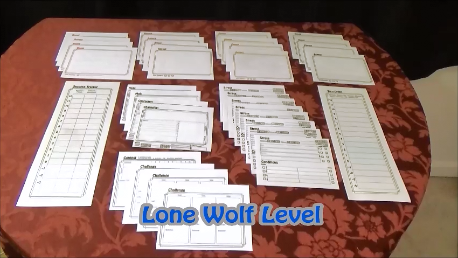
The premade cards make it easy to write up NPCS, keep track of stress and turn orders, or create an aspect in a jiffy. Just a reminder, we’re launching this month! You may commence salivating.


Note: Tangent Artists did not create this image nor hold the rights to this game. We will tell you it is awesome and you should buy it.

Note: Tangent Artists did not create this image nor hold the rights to this game. We will tell you it is awesome and you should buy it.

Back to Kill Doctor Lucky! For those who’ve never heard of it, Kill Doctor Lucky is a darkly-comedic board game created by James Earnest, and first published by Cheapass Games in 1997. It is one of their most famous titles, and has been printed in numerous editions, including the original 97 version, the 2002 Directors Cut (with 2 maps), and a full-art version licensed through Titanic Games. I don’t quite know how the rights are handled, but according to their website, Cheapass Games will once again be releasing their version of the game in 2016.

What’s more, the Cheapass Games website will let you print out the 2002 version FOR FREE! (Just watch your printer settings, otherwise you might end up with a very small map.)

2002 Director’s cut Version – How Does it Rate as a Game Mat?

Objective: To have spacious haunted mansion that the characters are exploring for the first time.

I’ll be ranking the game on the following scales:

  • Structured vs. Random 
  • Mood
  • Suspense 
  • Space 
  • Extras 

Structured vs. Random?: This first criteria is more of a spectrum, as Structure and Randomness are polar opposites. The game board is already preconstructed, and there’s very little you can do to alter this (save taping over the names of the rooms and adding your own, or editing the digital file.) This would rank it a straight 10/10 on Structure, but it comes with TWO boards- which means, you can choose which version you want to play with (giving you a less rigid model.) If you wanted to be weird, if the characters are in different rooms of the house, you can flip from one map to the other- suddenly, rooms that were once on the ground floor are now on the second level! As another way to introduce randomness, should you want it, on the main map, the rooms are numbered 0-19, which means you can pick a random room with a twenty-sided die; alternatively, you can just use the shuffle the room cards and have a character mysterious walk out of one room into a random one. Structure: 6, Random 4.

Mood: This is where the Lucky board does poorly. The basic set is, well, basic, with large empty spaces of white. This does give a GM a very blank canvas, allowing them a lot of variety (is it a well-preserved manor with residents, or a ramshackle manor barely staying upright?), but it also means they have a lot of work to do. The only flavorful elements provided by the board are the names of the room, which are not very scary, but provide a wonderful throwback to classic Edwardian manors. The boardgame version, which I do not own, has art that supports the mood better. Mood: 3/10

Suspense: To clarify, by “Suspense,” I am referring to the amount of information that is hidden from the players. With the Director’s Cut Board Game I was lucky to get about ten years ago, the board is broken into 6 different sections, giving the players information about 2-3 neighboring rooms, but nothing beyond (I’d give this Suspense: 8/10. For the other boards (the Titanic game board or the free print out version), the GM would either have to cover the other parts of the board or manipulate the image file (Suspense: 2/10).

Space: “Space” measures the practicality of the space. Personally, I found that the Kill Doctor Lucky rooms were perfect, especially in their slight variations. The majority of the rooms were big enough to house half a dozen figurines or markers with a little room to spare, making up a perfect fate core “zone.” A few rooms or hallways were just small enough that a few figures couldn’t squeeze in (which keeps it interesting), while the Ballroom makes for a dynamic scene for a conflict, requiring the heroes to scale up walls and swing on chandeliers to reach the top any adversary in the Gallery. Space: 10/10

Image by Cheapass Games. Buy it already.

Image by Cheapass Games. Buy it already.

Extras: The basic set doesn’t include too many extras (that was part of the point behind a Cheapass Game!) but it does include the cards. If you’re using the haunted mansion as the scene or a treasure hunt or a crime, you could use the various items as clues and red herrings; for example, a character digging around the nursery might find a Runcible Spoon. This would require taking out the room cards and all of the failure cards (although, you could leave in a few of the “distraction” themed failures to indicate that a character failed to find anything.) Extras: 7/10

TOTAL 38/50


What Kind of Story Can You Run with Kill Doctor Lucky?

Here’s an idea: Who Killed Old Man Miserkeister?

The city’s richest and meanest old man, Dr. L. E. “Old Man” Miserkeister, is finally dead. Despite being over 100 years old, he didn’t die of natural causes (likely too stubborn). Money would seem an obvious motive, but it not clear who would be the beneficiary; his wife passed away decades ago, and his daughter hasn’t been heard of in decades… some claim she eloped with a sailor, but loose tongues whisper about other, darker possibilities…

Old Man Miserkeister’s body he was found by his housekeeper (who only comes by once a month) in his dusty foyer, his head bashed in with a blunt object. The city forensics team have only started their investigation, but they suspect that the body was dragged, or quite possibly levitated, from another room. However, they have yet to find the murder weapon. Any officers that have attempted to investigate the many rooms of the moldy manor find themselves strangely distracted, disoriented, and driven slightly mad… almost as if something in the house, or the house itself, doesn’t want the truth to come to light. The police have turned to your team, which has experience with the paranormal, to find what they cannot. Find the murder weapon, and maybe a few other secrets along the way, and get out before you find yourself sharing Miserkeister’s fate.


That’s all for now. Join us next time for more thrills and chills!

STANDING ON THE SHOULDERS OF CYCLOPEAN HORRORS: THE WHITE PEOPLE

Standard

I love Lovecraft. I have yet to read all of his works, but I have read enough to understand why his stories are a steady source for many an adventure game; what he lacked in plot, he more than made up for in world-building and ambience. His fictional world is a perfect sandbox for other authors and roleplayers to romp, play, and run screaming through.

However, even Lovecraft borrowed from those that came before him. My goal, for the next year or so, is to study some of Lovecraft’s influences. One of the first authors I’ve encountered at was Lord Dunsany (note: his full name, in all of its splendor, is Edward John Moreton Drax Plunkett, 18th Baron of Dunsany… yeah, you can’t make this stuff off). Dunsany is amazing, but his influence on Lovecraft is more subtle; if anything, his work more closely resembles the work of Neil Gaiman. (I might do an entry inspired by him at some point, but not today.)

I stumbled on the next influential author when I started researching fictional languages: in Lovecraft’s “Dunwich Horror,” the villainous Wilbur Whately learned “the Aklo” for certain rituals. He used these rituals to seek knowledge and predictions, seeking questions from beings “from the hill” and “they from the air.” A little digging revealed that “Aklo” was invented by one of Lovecraft’s favorite authors, Arthur Machen. Chronologically, Machen is a late Gothic writer, although some have called him one of the fathers of modern horror. His story, “The Great God Pan,” has been described by Stephen King as “Maybe the best [horror story] in the English language.” Machen invented the rituals and gestures of Aklo in the 1899 story, “The White People.” The story takes the form of a journal, written by a young girl, as she travels to hidden worlds. I found reading the stream-of-consciousness narrative is a little frustrating (it reminded me of the horror I felt reading “The Portrait of the Artist as a Young Man” is high school), but the concepts are beautiful. In honor of Machen, I’ve adapted his White People into this blog’s monster of the week.

THEY FROM THE AIR / THE WHITE PEOPLE / NYMPHS

Lecturers at Miskatonic University are often plagued by questions about beings of olden times, of sunken cities and old gods of the ice and sea. Some of their colleagues in England and Wales, however, have been tracking an equally old but divergent thread of inquiry. These archeologists, looking into the ritual sites of gods of the Prehistoric Britons, discovered markings unlike any subsequent language in the area. They bear a cursory resemblance to Aklo, but as this language is mostly documented in the Fertile Crescent, making any crossover undoubtedly a coincidence. Accounts from Roman scholars stationed in the British Isles speak of altars erected to gods of the sky and roaming nighttime ceremonies. The Glendower area is also rich with local folklore, with countless stories about travelers being lead astray by fairies, will-o’-the-wisps, or the devil himself. Dr. Ravensbourgh, a renowned biochemist, believes that the local phosphorescent fungi may be the inspiration for both folk tales of the last few centuries and the gods of ancient times.

However, for the sake of completeness, it would be amiss to not include one final theory: Dr. Llewellyn, a longtime colleague of mine, had recently gone missing during one of his archeological digs. He was found several days later in a terrible state of mind; he claimed that a tunnel in one of the burials mounds lead to a valley henceforth not notated on any modern map. He described creeping vines that have yet to be classified, standing stones that seemed to sing wicked songs, and many more impossible sights. He claimed that at the end of the valley was the Woods, which he said, “must not be described.” Hidden within was a pool filled with fire, attended by nymphs that whispered secrets… the closer he came, the more he understood. He said that they glowed with an otherworldly beauty… a grace so perfect that it overbore his mind and nearly burst his heart. The doctor’s condition has stabilized, but I don’t believe he shall ever be the same. If it can be believed that there are old gods that are so hideous that they can drive men mad, it must therefore be surmised that the opposite is also true: that there could be beings out there of such splendor that the human mind cannot encounter it and remain unscarred.

High Concept: Otherwordly Spawn of the Air

Aspects: Radiant White; Hypnotizing Beauty; Here and Gone Again; The Old Ways Have Power

Skills:
+3 Evoke
+2 Athletics, Empathy
+1 Notice, Burglary, Will

For rules on Evoke, see last entry: FATE HACK – EVOKE – KILLING WITH KINDNESS

Stunts:

Untouchable: If a Nymph uses Athletics to overcome a physical obstacle and ties, treat it as a success; if you roll a natural success, the nymph may move an additional zone or take an additional action this exchange (may only gain one free action each exchange).

Like the Wind: During their exchange, before taking any action, a Nymph may place the aspect “Phased Out” on itself; this is a free action. While that aspect is on it, the nymph is invisible and intangible; similarly, it cannot Attack, nor can it suffer any kind of stress, but may use or be targeted by other actions as normal. The nymph may discard the aspect at any time, and other characters can overcome the aspect with Notice.

THE WHITE LADY

The White Lady is a prominent figure in local folklore; all of her stories end in eternal bliss or in tragic deaths, with nothing in between. Her tales often pair her with a mysterious Man in Black; depending on the story, he is either her servant, her lover, her nemesis, or all three.

Aspects: Radiant White; Hypnotizing Beauty; The Man in Black Will Be Here Soon

Skills:
+5 Evoke
+4 Athletics, Empathy
+3 Notice, Burglary, Will

+2 Stealth, Deceive, Lore,

+1 Investigate, Shoot, Craft, Resources

Stunts:

Untouchable: See “Nymph”

Like the Wind: See “Nymph”

Lock On: If the White Lady uses Evoke to attack a target and succeeds or ties, place a “Drawn In” aspect on the target. The next time the White Lady attacks that same target with that aspect, the White Lady gains +2 on the attack. This is cumulative, so the attack gains +2 for every previous attack (i.e. +2 on the second attack, +4 on the third, etc.) A character may overcome a Drawn In aspect on themselves with Will, or may overcome a Drawn In aspect on an ally with Provoke; likewise, if the Drawn In character succeeds with style on a Defense roll against the White Lady, they may remove the Drawn In Aspect instead of taking a boost


AND NOW, A WORD FROM OUR SPONSOR:

Remember, this month we are launching the kickstarter for Fate Accompli, our original erasable notecards for Fate gamers.

FateAccompli_KickStarter_Banner_V2

Here’s two snapshots of our kickstarter video.

The normal cards, they are le fail.

The normal cards, they are le fail.

Bask in their glory. BASK!

Bask in their glory. BASK!

More updates coming soon!

FATE HACK – EVOKE – KILLING WITH KINDNESS

Standard

I’ve pondered this in a previous blog or two, but now I’m going to explore it in full: I propose an alternative to the Fate Core skill Rapport. I give to you:

EVOKE

Elf Connection

Elf Connection

Evoke is the skill of friendship, inspiration, and seduction. While Contacts focuses on the friends you already have, Evoke judges your ability to make new connections and friends. Characters with a high Evoke are often skilled orators, knowing how to effectively move a crowd; but unlike Deceive, Evoke comes from honest emotion, as the orator talks about something that they believe in, or offers promises that they intend to keep. Alternatively, a skilled Evoker may be an artist, using a musical or dance performance to stir the emotions in an audience. It is the opposite of Provoke, which brings out the negative emotions in others.

Remember: Just because a character is filled with positive emotions doesn’t make them “good.” Many tyrants and zealots have killed out of love.

ACTIONS

OVERCOME:

Evoke may be used to overcome simple NPCs that stand in your way, by using your words and body language to befriend or convince them you are on their side. Evoke may also be used to remove negative emotional aspects placed on other characters, a group or a scene, such as aspects about fear, depression, or anger. They may not be used to remove aspects placed on yourself or heal consequences without additional stunts. The target opposes with Will.

CREATE AN ADVANTAGE:

Evoke may be used to place positive emotional aspects on characters and scenes, such as giving a teammate a Boost of Morale, or telling a joke to a crowd to Lighten the Mood. It generally cannot be used to discover hidden aspects on a character (this is better done with Empathy). The target opposes with Will.

ATTACK

In mental conflicts, Evoke may be used to “attack” other characters – rather than dealing physical or emotional harm to the defender, it signifies your efforts to seek a compromise and erode away the defender’s will to fight. Any consequences you deal would be themed around the opponent sympathizing with your ideal (ex. He’s Got a Point), feeling an attachment to you (ex. Crush on the Enemy), or trusting you implicitly (ex. I Can Trust This Guy!). Characters defend against Evoke with Will. Like Provoke, you may only use Evoke to attack if you have had a previous opportunity to discover a weakness or establish a short relationship with the target (ex. You have used Empathy to discover what positively motivates the defender).

DEFEND

Evoke does not grant any defense without stunts.

A rare day for Morf.

A rare day for Morf.

SPECIAL NOTES
Provoke – Just as Evoke lets you overcome negative emotional aspects from others, Provoke gains the ability to remove positive emotional aspects placed on other characters and on scenes.

Animals – If your setting includes a nature-themed skill (ex. Survival, Wilderness), Evoke cannot be used to deal mental stress to animals; instead, Survival/Wilderness gains the ability to deal mental stress to animals as if it were Evoke. Characters may still use Evoke to create aspects on animals as normal.

AN EXAMPLE

A great example of Evoke in popular media is the Sir Didymus scene in the Labyrinth. When attempting to cross a bridge, Sir Didymus stands in their way, refusing to let them pass. An attempt to fight him in hand-to-hand fails to remove him; however, it did succeed to winning his respect, and it did reveal more of his personality. He is not a bully hindering them out of spite, but an honor-bound knight.

This is where Evoke comes into play. Sarah politely asks him what the exact words of the oath he swore, to which he replies, “that none may pass without his permission.” Sarah then does what none have done before: ask for his permission. A confused Sir Didymus gladly grants it.

She overcame Sir Didymus because she appealed to what he cared about most: his honor. Fueled by her earnest love of her brother, she used a combination of logic and courtesy to weaken her opponent’s resistance. She used a positive interaction to remove an obstacle and, as a bonus, gain an ally.

EVOKE – STUNTS

I’m Good Enough, I’m Smart Enough, and Gosh-Darnit, People Like Me! – You may use Evoke to overcome negative emotional aspects placed on yourself. It may not be used to overcome consequences. Also, once per session, you may attempt to place a positive emotional aspect on yourself as you attempt to psych yourself up.

Laughter is the Best Medicine – You may use Evoke instead of Empathy when you are helping other characters to recover from mental consequences. You may not use it to heal yourself.

I’ll Play the Good Cop – If one of your teammates has successfully used Provoke or Intimidate this scene to deal mental stress to an enemy character, any of your successful Evoke attacks against that character deal an additional two mental stress.

Siren’s Call – Whenever one of your Evoke attacks takes an opponent out during a conflict, you have effectively hypnotized the target. After the conflict, you may make the character go to sleep, forget recent events, talk about anything, and/or carry out simple commands. However, the character will not do anything to harm themselves or others.

Love is Stronger – Whenever you use Evoke to create a positive aspect on a character or scene, and someone attempts to use Provoke to overcome it, you can use Evoke to actively oppose the roll.

Incurable Optimist – Your natural positivity is your best defense. When another character attacks you using Provoke or Intimidate, you may defend with Evoke instead of Will.

OTHER STUNTS

Remember that Place with the Thing? – Contacts – Whenever you use Contacts to create a character, you may use Contacts as if it were Evoke to deal positive mental stress to that character. This represents you weakening their resistance with stories about mutual friends and the good times you used to have.

Would I Lie to You? – Deceive – You may use Deceive as if it were Evoke to positive mental stress to a character. However, the target may defend with Will or with Empathy. Once they have successfully defended against one of your attacks (i.e. one of your attacks fails to either deal stress or to tie), that character gains the aspect “I See Through Your Lies.” While that aspect is on that character, you may not use Deceive to attack it.

Sympathetic Soul – Empathy – You listen more than talk, but when you do open your mouth, you know just what people want to hear. Once per scene, you may use Empathy as if it were Evoke for any action (ex. overcome a minor character, deal a positive mental attack, etc.)

Want for Nothing – Resources – You have everything that could make you happy. When an opponent uses Evoke to attack you, by attempting to bribe you with promises, you may defend with Resources instead of Will.

Iron Resolve – Will – Your ideals are unshakable. You gain +2 Will when defending against Evoke attacks.

Hate is Stronger – Provoke – Whenever you use Provoke to create a negative aspect on a character or scene, and someone attempts to use Evoke to overcome it, you can use Provoke to actively oppose the roll.

I’m Not a Pessimist, I’m a Realist – You don’t just induce negative emotions, you embody them. When another character attacks you using Evoke, you may defend with Provoke instead of Will.


That’s it for this week! Next week, I’ll be exploring Evoke some more, and possibly giving you more sneak-peeks of the Kickstarter launching month, Fate Accompli!

AWESOME-CON 2015

Standard

This week, we’re going to take a small break from games and go over some of the fun of Awesome-Con.

AWESOME-CON 2015

Nowadays, Tangent Artists sells everything; original novels, fan art, comedic game guides like “The Handbook for Saucy Bards” and “The Cleric’s Guide to Smiting,” and soon will be including original games. However, when Tangent Artists first formed about eight or so years ago, all we did was comics. We had only one double-sized comic to sell, and had hit a few small Anime conventions with it, and it fairly well.

Then, we hit Baltimore Comic Con. I bare no ill will to BCC, but it did not go well. All we got that weekend was comments on how our artist’s style was not like “normal” style. It didn’t matter that one of the comics was essentially an undead superhero comic, it didn’t “look” like a superhero book, so hardly anyone was interested. For this reason, we generally stuck to Anime conventions for quite awhile, and they still continue to be our best selling spots. When we started writing our fantasy comic CRIT!, we started hitting the Fantasy & Sci-Fi cons as well.

Over the years, however, I’ve noticed something: the cons are blending together. The best selling prints we’ve peddled at Anime cons is our Doctor Who stuff. Cosplayers, which used to primarily frequent Anime conventions, are now showing up everywhere. (Now, there’s a chance it’s the decedent of Masquerade from fantasy cons of ’80s, but I suspect it’s actually a form of parallel evolution.) Even the subject of cosplay has broadened from Anime to all sorts: live-action shows, video games, rock stars, even internet memes.

Case in point, I got a lot of positive feedback walking around with this for two days.

I'm not saying it's aliens, but it's aliens.

I’m not saying it’s aliens, but it’s aliens.

Likewise, many new conventions realize that the cons are becoming less specific and more a celebration of everything-nerd. Awesome-Con seems to embrace this, giving no real specifics about what type of convention it is, having guests from cartoons, WWE wrestling, Mythbusters, Star Trek, and Power Rangers. Last year, I had the pleasure of attending AwesomeCon as an attendee with some good friends, and had an absolute blast. They accepted our application for Artists Alley, and we jumped at the chance.

Yeah, I know what you’re thinking, “THIS IS A GAME BLOG, WHERE ARE THE GAMES?!”

I didn’t get a chance to join in too many games, but I did get to briefly meet two groups:

BREAK MY GAME

A DC/MD group dedicated to building and playtesting games. I had the pleasure of attending their panel and testing one of their WIP games. Find their Meet-Up at http://www.meetup.com/Break-My-Game-Developers-and-Playtesters-Unite/

I also was lucky enough to test the fighting card game “Mahou Shojo” by DeerFox Games. Their Kickstarter just ended, and after playing one round of this game, I went straight home and bought the starter pack. This is going to be a game to watch.

FINAL THOUGHTS

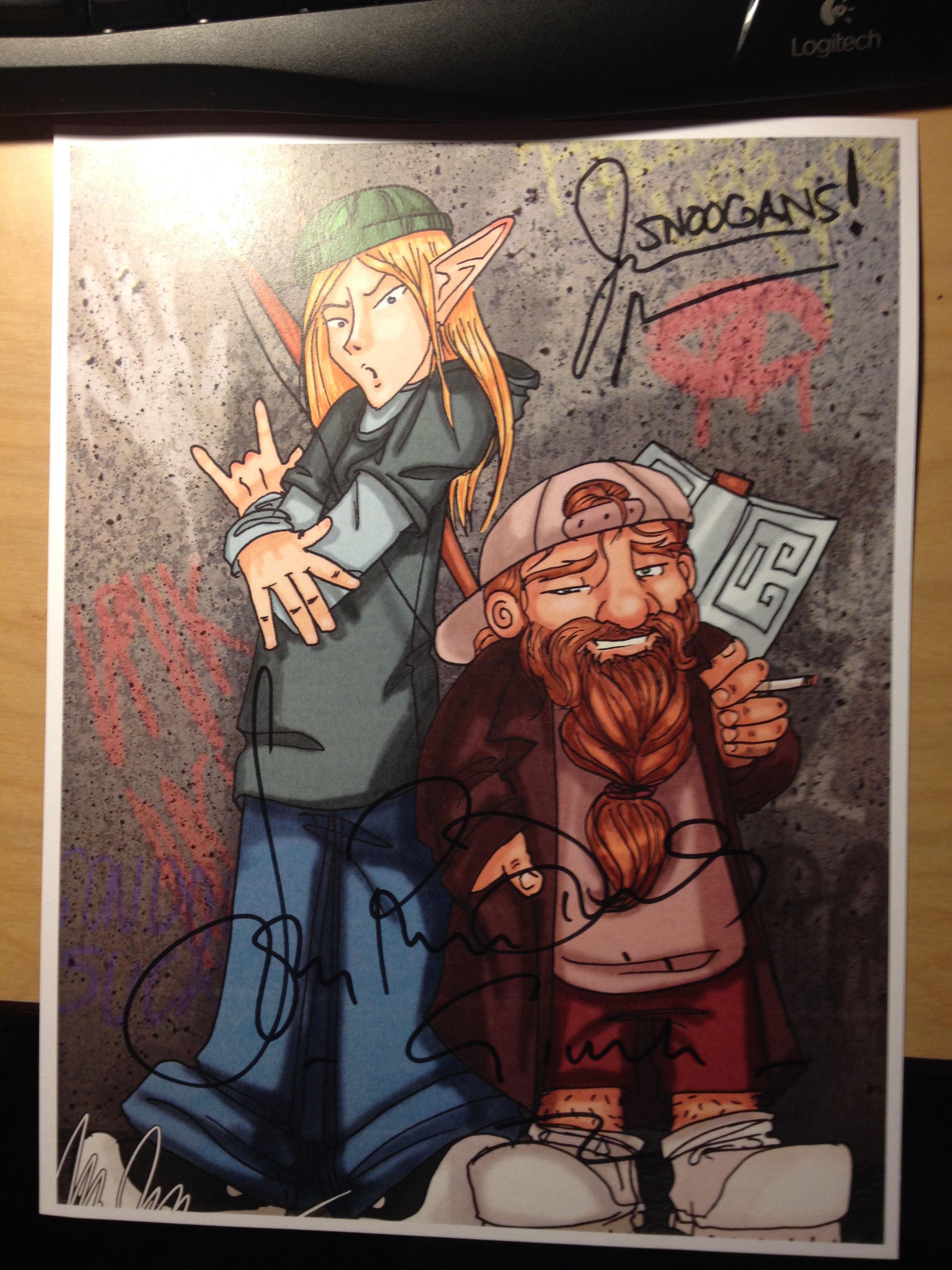
That wraps most of this week up, except I had the pleasure to get our group’s infamous “Legolas and Silent G” print signed by none other than John Rhys-Davis and… Jason Mewes?!?

legolas and silent g

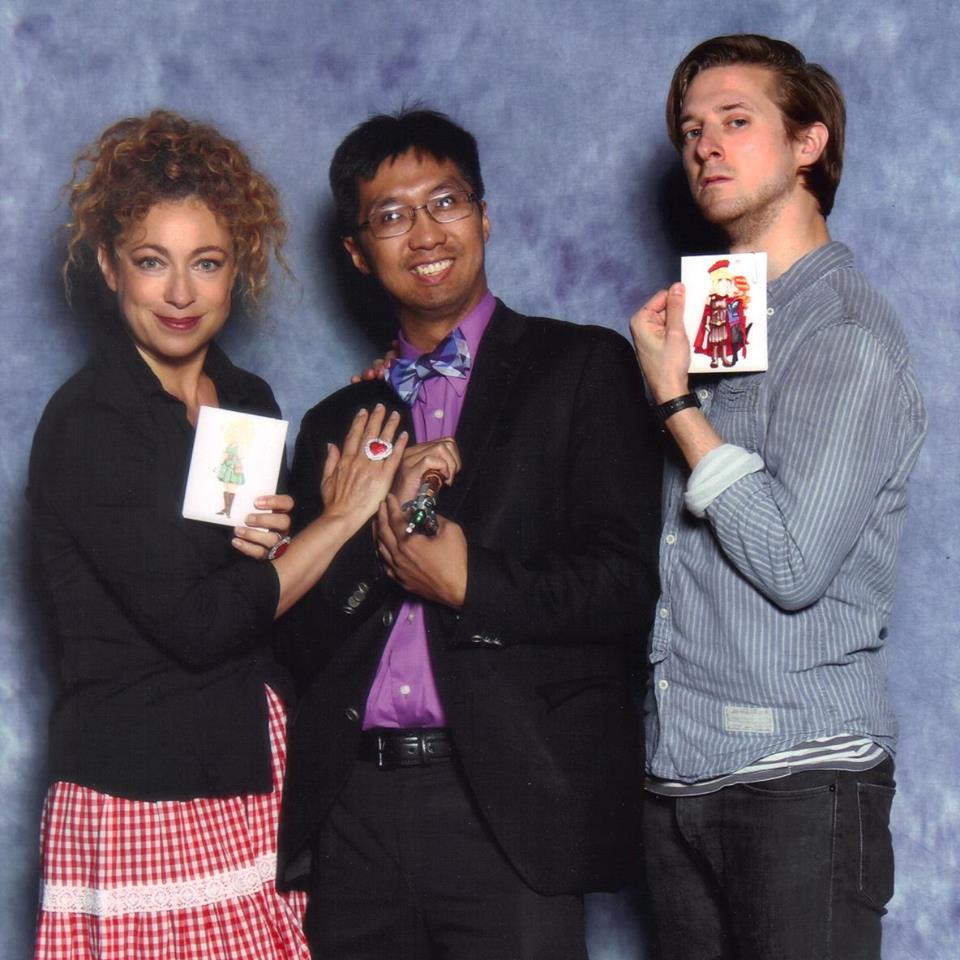
Also, Michael Santos Sandoval, friend, actor, and poet, 
got a picture of Whovian actors Alex Kingston & Arthur Darvill posing with mini-prints of them. Hope they liked them!

awesome con ponds

See ya next time!

Kickstarter – Site to Behold!

Standard

Only a short post this week, as we’re working hard on getting everything ready for day one of shooting for our Fate Accompli Kickstarter. Gotta make sure all the props are gathered, cue-cards are printed, and camera batteries are charged!

So, this week we unveil our newest piece of prototype art, designed by Tangent Artist Indy: TA-DAH!

Fate Accompli Banner

If you want to commission Indy for your own project, contact tangentartists@gmail.com

Of course, we’d love YOUR advice on where to post it. Where can we post it? Know any affordable advertisement sites for gamers? Where do you recommend? Send us your links!

ASPECTS – CAN YOU PICTURE THAT?

Standard

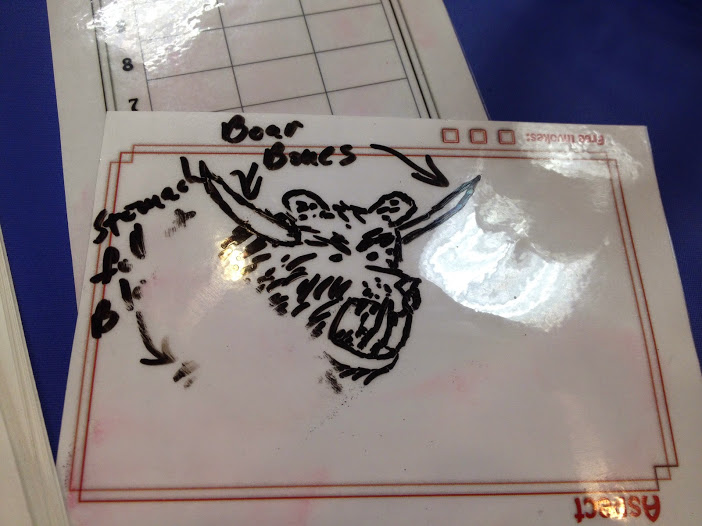
While thinking of a shameless way to write a blog about our company’s erasable notecards, which will soon be pre-sold on our kickstarter as “Fate Accompli” in July, I was reminded of one of my favorite playtests from GEN CON. We were playing our original FAE setting, “Dungeon Tours LTD,” which included the PCs creating a fake monster by stitching together random animals they had killed. The end result was a bear-boar-miscellaneous hybrid beast which they dubbed the Jeff. The name was all them, but I also asked them to draw the head of the dread Jeff.

the jeff

The Jeff. Fear it.

(Can’t remember the artist’s name, but if wants to come forth, I will be glad to credit him.)

In This Week’s Post: When I often introduce new players to FATE, I often tell them it’s a game of words. However, today we’re going to explore a new idea: using pictures! We’ll talk about the several ways you can use pictures along with or instead of words when creating your boosts and aspects, and in what ways they might enrich your game.

METHOD ONE – WORDS & PICTURES
One of the first ways you can use pictures alongside descriptive sentences; this is a redundancy, and thus has no immediate change on the game play, but it does have a few psychological benefits.

a. Sense of Play – Unless you are a professional artist, you’ve probably spent done more drawing and coloring in one year of elementary than you have in every post-elementary year since then combined. It’s no surprise then that drawing makes you feel young, and reminds you of idyllic art classes from days long ago. It’s a small thing, but it puts people in the right mind set- they’re ready to fire up their imagination and play games of make believe (which is really what RPGs are.)

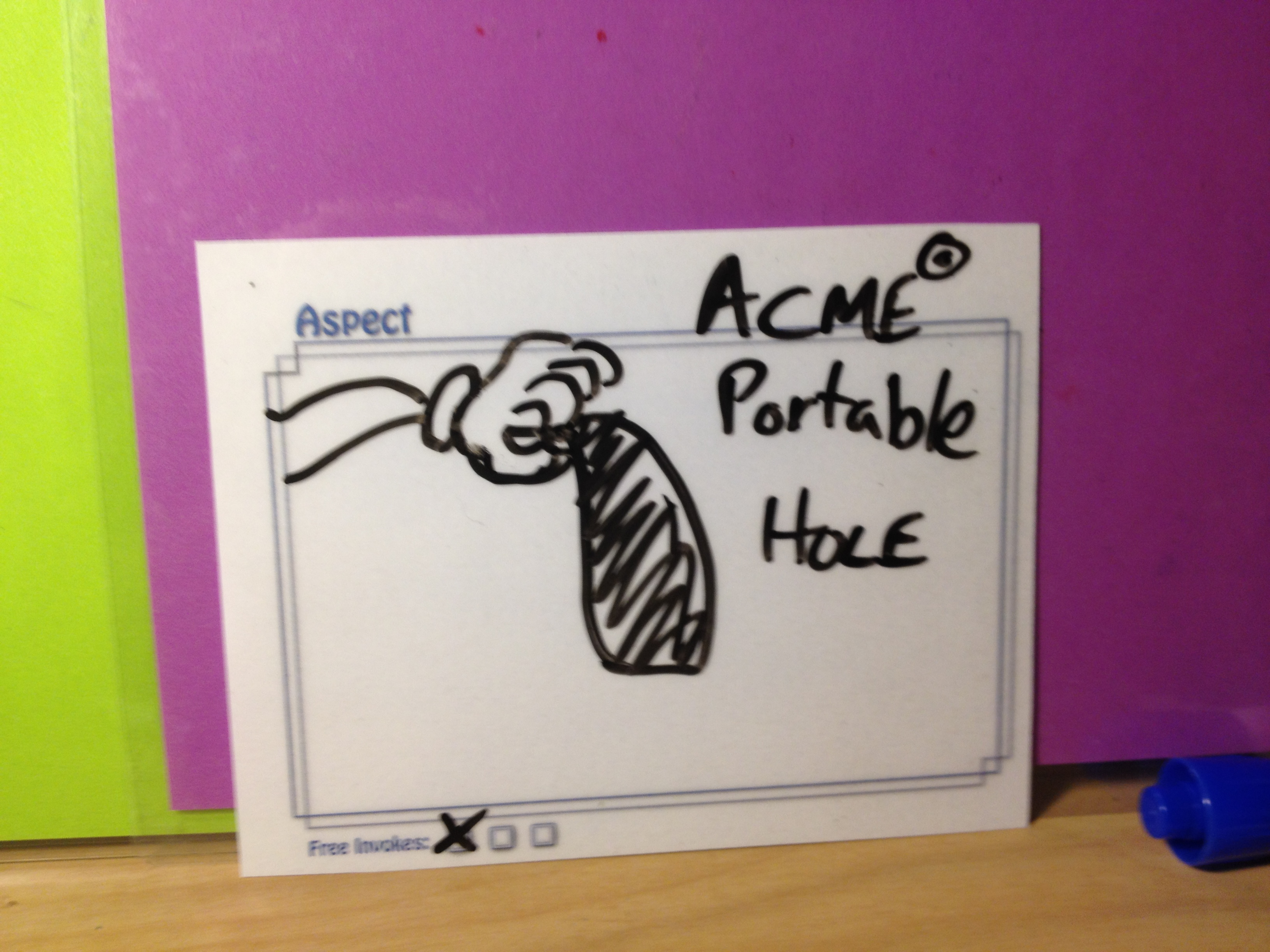
Toon Tested, Acme Approved

Toon Tested, Acme Approved

b. Genre Immersion – Depending on the setting, drawing also lets the players get in more in touch with the characters. “Dungeon Tours LTD,” as we mentioned above, is a game involving the PCs crafting objects. Likewise, any game which involves the PCs making something, like a cooking show contest or a creation god, the players are mirroring the creation of their characters, making the mental bond closure. Alternatively, drawing is also apt for any game setting typically associated with drawn visuals, such as a setting starring superheroes, anime characters, or loony cartoon characters.

METHOD TWO – PICTURES INSTEAD OF WORDS

As another option, you can have aspects represented by pictures, but with little or no words describing it. For example, you might have an aspect card with the written words “carving on wall,” but the only drawn indicators of what the glyph looks like.

I'm guessing Demon Cult, or Georgia O'Keeffe wannabes.

I’m guessing Demon Cult, or Georgia O’Keeffe wannabes.

Reason a. Mystery and Doubt – This is useful tool when a GM draws a clue for a group of players in a mystery setting. The image is intentionally vague, leaving players several hints, some of them contradictory. Like a Jackson Pollack painting, it might even be unclear which direction is up. Like a Rorschach test, the players might interpret it a hundred different ways. When asked to interpret an evil symbol, they might make wild theories about cults devoted to octopus gods, snakes, pasta monsters, or things you’d never have come up with. If one of their random ideas is better than the one you had, go ahead and change it! *

*Note: If a player is getting frustrated, don’t make the player depend solely on their own wits. Let them roll on their character’s skills (ex. Lore, Academics, Mythos); if successful, you can give the players hints about how the clue might resemble things the character has encountered before.

Reason B. Deliberate Misinterpretation – If a player is trying to create an aspect to reflect something that their character has made well, give them a chance to draw a picture to represent it in all of its glory (if they don’t fancy themselves an artist, imagination can take care of the rest.) However, if their character fails the roll, and creates something half-baked, you can use the player’s drawing to inspire how the malformed creation: this can be done by restricting them in some way, like forcing them to draw with their opposite hand or giving a only a few seconds to work. Thus, any mistakes they make might inspire the final aspect, like an illusionary double that’s basically a smiley face, or a summoned demon that has two arms but no legs.*

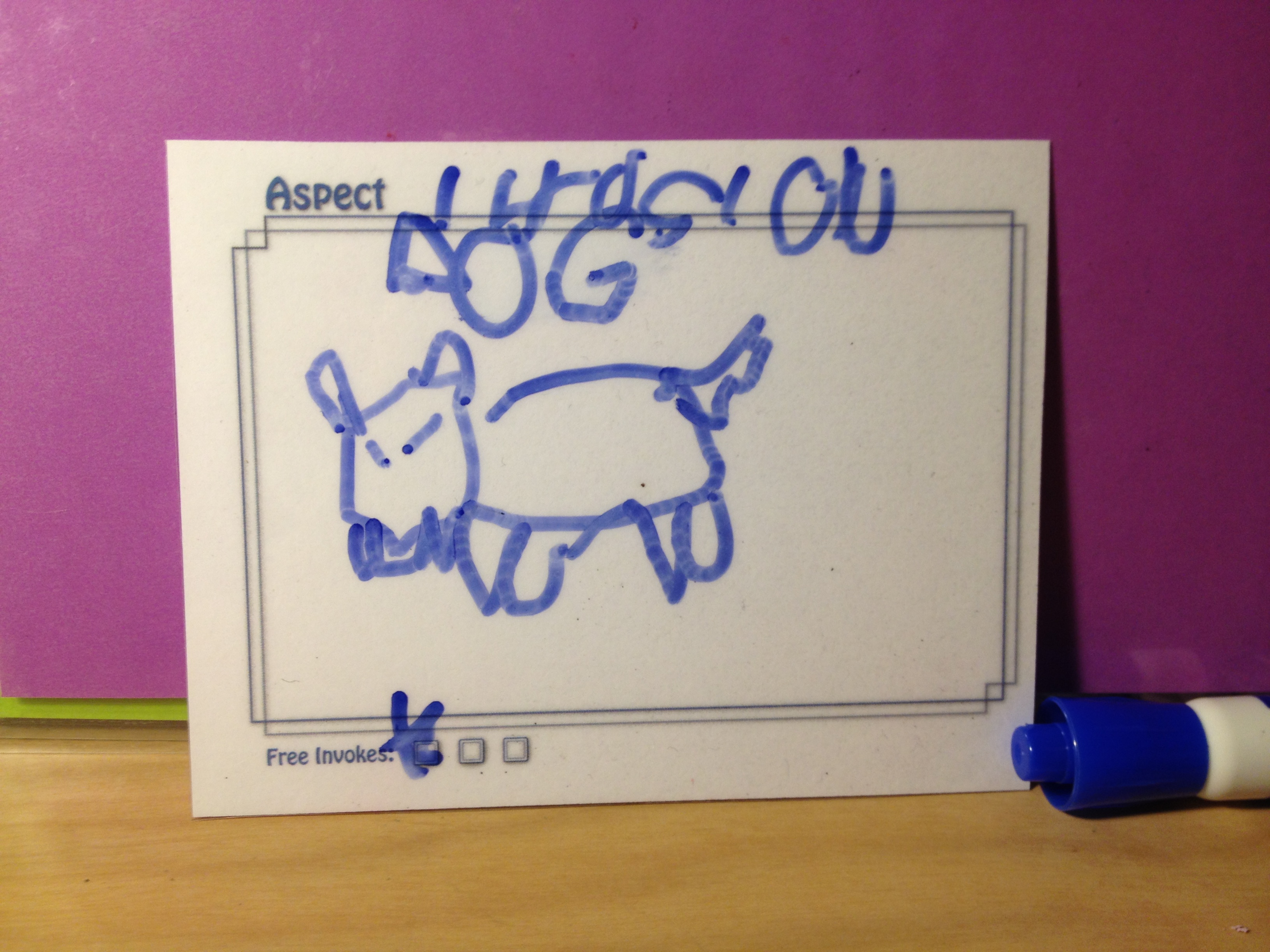
Of course that's a dog. Shut up.

Of course that’s a dog. Shut up.

*Laugh at vs. Laughing with- Adding art to aspects can also result in some comically bad drawings; however, you should always be careful about laughing at the art of others, especially people you don’t know very well. If in doubt, only laugh at art you made yourself.

METHOD THREE – MECHANICAL PICTURES

Lastly, it’s possible to have a picture that is not just pretty, but also functional- this normally gets into the pictographic territory, as there is something numeric that is also conveyed in the image. Here are a few things you might convey:

a. Invokes – An easy thing to keep track visually is invokes,

With all the talk of Rorschach, we had to slip in some pretty flowers.

With all the talk of Rorschach, we had to slip in some pretty flowers.

particularly in that they seldom do over a large number. I would recommend one image for the aspect, and a separate image to represent the invokes (ex. Drawing a gun, and using invokes as bullets), or representing an aspect as a white flower with the invokes as dark flowers.

b. Stress – You could have each player draw stress as images (ex. hearts) and erase them as they take stress. Alternatively, you can have it the other way around, with a healthy character drawing stress gaining pictures to represent stress they suffer. (For a variant, see the “Hangman Stress” below).

STRESS VARIANT – HANGMAN STRESS

Rules: All PCs get a single stress track of six points, each absorbing one stress. There are no mild consequences. Stress is measured not in tally marks, but in body parts: head, torso, right leg, left leg, right arm, and left arm, similar to the kid’s game, Hangman. Whenever a pc takes a stress point, they draw

Stayin' alive, stayin' alive.

Stayin’ alive, stayin’ alive.

a body part onto their tracker. You can pick which part arbitrarily, but it is best done through the fiction- if you take damage from a rock falling on your head, it makes sense to fill out the head. If an opponent attacks you and succeeds with style, instead of gaining a boost, draw an indicator on the wounded body (ex. An arrow sticking out of a body), which counts as an invoke. While there is an invoke on a body part, treat it as an aspect that can be invoked. Ex. Quince the barbarian has an arrow sticking out of his arm. The vicious orc attacking him in combat could invoke the arrow, removing it (and making the aspect disappear.) Instead, he decides to spend a fate point to invoke the hurt arm, saving the free invoke for a future exchange.

When a character has the fully drawn body and suffers stress, they are removed from the combat.

Lower / Higher Stress – If six is too high, consider making the head and torso one piece, or giving the character a “V” as a pair of legs. For higher stress, find a finite number of other body parts to add on (ex. A tough dwarf drawing on a beard.)


CON NEWS!

This Sat & Sun, Tangent Artists will be at Tidewater Comic Convention in Virginia Beach! Drop by to buy a one-sided die, playtest a game, or just say hello! Say that you’re a proud Tangerine, and get a gift prize!

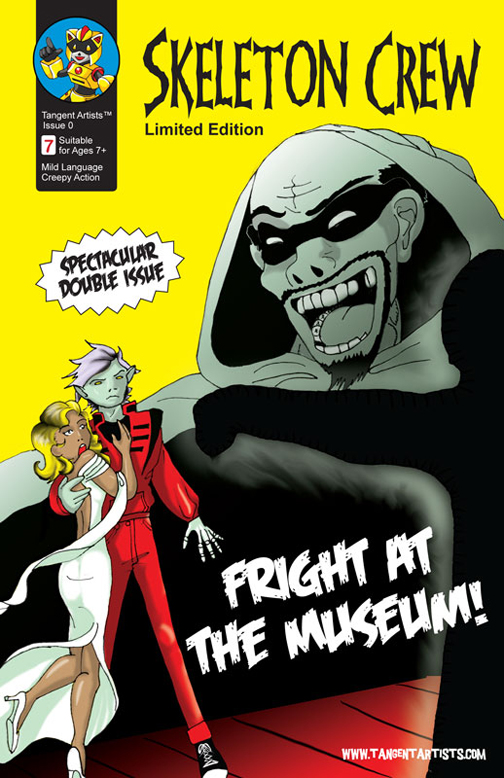
SKELETON CREW – FRIGHT AT THE MUSEUM

Standard

Last week, we gave out a slew of pre-made characters. This
You'll jump! You'll swoon!  You'll demand to see the manager!

You’ll jump! You’ll swoon! You’ll demand to see the manager!

week, we’re going to give you a full adventure to run. This one was inspired by the first Skeleton Crew comic we ever wrote (if you’re a player, no peeking, as there are spoilers!) I’ve used it at many conventions, it can generally be run in a little over 2 hours. Enjoy!


SKELETON CREW – FRIGHT AT THE MUSEUM

This is a Skeleton Crew RPG pickup game, designed for 2-6 players. The PCs start with 20 points of skill, with a cap of Great (+4). While some of the skills and aspects are provided for the players, Fate is a very much a “make it your own” kind of game, so we have left some parts blank. For filling in aspects, the GM will start the game by asking a few questions, to see about the character motivations and connections. Any open skills or aspects can be filled out before the game, after it starts, or even near the end. GMs are encouraged to let players switch out skills, even mid-game, and not to worry too much about the retroactive changes. Reminder: if they decide to gain more Physique or Will, it will give them extra Physical Stress or Mental Stress. Keep this in mind.

THE SET-UP

Read aloud: You’re New Manchester’s premier team of Monster Hunters and paranormal investigators. You have tangled with plenty of underworld criminals, and have made many enemies, but you’ve also recruited a handful of allies. One of them, known as the Nosy Shadow, just heard that the necromancer Deadringer is hitting the Schmitzonian Museum of Natural History tonight. You head there as fast as you can, hoping you can beat him there.

As you pull up to the Schmitzonian Mall, you recognize the building- it’s the one with the giant banners advertising their touring exhibit, “The Mummy of Amon-Khee-Sunkhel.”deadringer comical scared

As the crewmates pull in closer, they see the skinny Deadringer at a broken window, slipping himself through. He sees you coming up, curses to himself, “Oh, fudge me!” and climbs through awkwardly.

POTENTIAL PCS

For a list of pre-made PCs, see last week’s blog post. If you want to reverse the gender of any of them, go ahead- Shelley can easily become “Sheldon” or “Percy”. It’s your game!

PRE-GAME QUESTIONS

TEAM ASPECT – Your Team aspect is “Monster Hunters”

The GM should ask the players the following questions- these will help shape their aspects and relationships for the upcoming game. If the same player tries to answer more than one or two, make sure you allow other players a chance to answer some.

  • Best Mate – You (A) consider another character your best mate in the whole world- you have saved each other’s necks so often you’ve lost track. Character B – write an aspect describing your strong feelings towards A (love, trust, disgust, etc.)
  • Former Enemy – You (Character A) find yourself on a team with a former enemy (Character B.) Write your feelings towards this character. Do you trust ‘em? Character B: do you mistrust A back? Is there an ulterior motive behind your cooperation?
  • Superiority Complex – You (Character A) consider character B to be your biggest rival- according to you, B thinks he’s SOOO much better than you, and you’ll do anything to prove that you’re the best. Character B: Is A your rival too? Do you feel like A is better than you, and you likewise have to prove your worth? Do you actually feel superior, but don’t feel the need to prove it?
  • Love in the Air– You (Character A) are head over heels in love with character B. Character B: write an aspect showing your acceptance of this love, or your knowledge / lack of knowledge about it.
  • Ulterior Motive – You (Character A) secretly or overtly want something that only Character B can give. Does B know information about a secret treasure? Does B have an ancient artifact that you’re eager to pull from their dead fingers? Character B: Do you know of A’s objective, or do you only have vague hints?
  • Love Gone Sour – You (Character A) used to be in a romantic relationship with Character B, before it crumbled; OR, Character A had a relationship that was disrupted, thanks to Character B. Write your an aspect reflecting your interpretation of the events.
  • Like a Son / Daughter– Between you (Character A) and Character B, there is a paternal / maternal bond. Pick which is the father/mother figure, and which is the son/daughter figure (age might be a good indication.)

Team Chemistry -The Chemistry aspect describes how the group members view each other. If you want, this can explain hint at a mutually shared past. Here’s a few examples:

  • Trusted: Band of Brothers / Old War Buddies
  • Familial:  Childhood Friends / Test Tube Experiment Siblings
  • Awkward: Thrown Together / Distant Co-workers / Amateurs & Old Pros
  • Competitive:  Confederacy of Rivals / Enemy of My Enemy is My Friend
  • Hostile: Every Man for Himself / If We Get Chased, I’m Tripping You

Note: For 2 hour games, this section can be skipped. If so, here’s a recommended pre-made Team:

Team Name: Skeleton Crew

Team Concept: Monster Hunters

Team Chemistry: Second Family – Love & Brotherly Hate

The following section contains spoilers of what’s ahead, and should be viewed by the GM Only – players, back off!


“Fright” Story Structure:

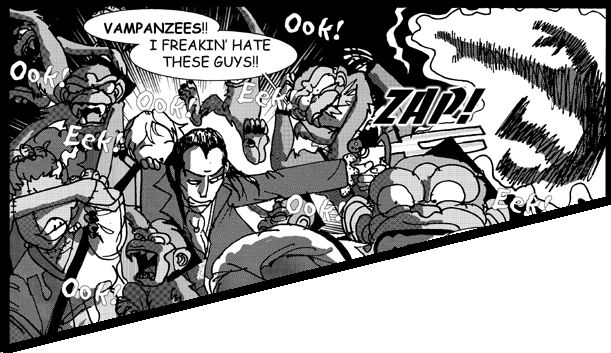
  • Act 1 – The Foyer / Vampanzees Attack!
  • Act 2 – The Hall of Sharp Pointy Objects / The Orb of Kao!
  • Act 3 – The (Empty) Mummy Exhibit
  • Act 4 – The Dinosaur Exhibit / Rex Awakens!

ACT 1 The Foyer

End Goal:

  • Story: Players are to dispatch or placate the vampanzees
  • OOC: Players are to become accustomed to rpgs (turns, skills, declaring actions,) and Fate system (combat, aspects, stunt & invokes). If possible, also introduce compels and consequences.

Players should enter the building after Deadringer- common ways include climbing in through the window (athletics) or breaking down the solid door (physique).

The first room is the main hall of the museum.

Once you get in, you see Deadringer at the other end of the hall, about to slip into the first exhibit.

I’m going to get the mummy. If you have a problem with that, you can talk about it to- my army of vampanzees!”

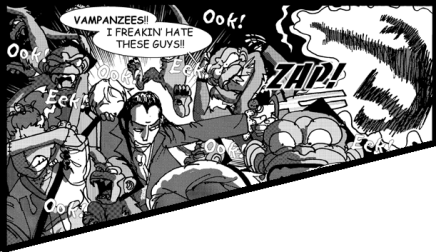
Deadringer pulls back his cloak an reveals a cluster (hardly an army), of vampanzees- namely, vampire chimps, complete with tiny fangs and short black capes.
vampan hate

At this point, players should brainstorm what the main hall is like. I recommend a large Woolly Mammoth model in the center of the room. Other ideas could include a gift shop, an info kiosk, fire extinguishers, lighting fixtures, etc.

Vampanzees – Mob
High Concept – Vampire Chimps
Aspects: Overly Curious; Bouncy Little Bastiches; Fight or Flight
Skills : Fair (+1) rating in Athletics.
Stunt: Clamber – If a Vampanzee is in a mob of 2 or more Vampanzees, it can make Attacks with Athletics. (If NOT in a Mob, it will generally join another mob or run away!)
Stress: No shift boxes— one shift of harm is enough to take them out.
(Note: The number of vampanzees are handled like mobs- each one is weak as heck, but add up to a threat if not divided. There are is a mob of 3 per character.)

Alternatively: Have only 2 vampanzees (which will be weak,) but invoke their aspects a lot- this will demonstrate the players how invoking works. 

Initiate Combat – Roll for Notice (Reminder: Zomboy & Caomh have stunts that give them order bonuses).

Determine the objectives & stakes: Vampanzees, for their part, want to scratch you, drink your blood, and maybe eat a few fingers, until they’d grow bored with your bodies.

Phase 0: I recommend you institute Phase 0, especially with a new group. One the first exchange, characters are not allowed to make Attacks- instead, they can only Create Advantages or Overcome.

Possible Compels to consider: Vampanzees are very curious. Weston has trouble with Light. Amon-anda might has trouble is the Vamps act in a particularly nasty way.

Once the vampanzees are cleared, players can follow Deadringer down the hall.

ACT 2 – The Hall of Sharp Pointy Things

End Goals:

  • IC: Characters reach the end of the hall, which is best achieved by disabling the Orb of Kao.
  • OOC: Characters have experience with a non-combat obstacle, and test out a Challenge.

(Note: In a Short, 2 Hour session, this section is less necessary to the plot- the number of successes can be reduced as time dictates.)

As you leave the main hall, you get a closer look at the exhibit Deadringer escaped through: “The Hall of Sharp Pointy Objects.” It seems a poorly thought out exhibit, with display items ranging from historical, like ancestral knives and spears, to mundane and random, like bent pipes and jagged rocks. Really, someone should be fired for this.

At the end of the hall, you see Deadringer place a large black crystal ball on the floor. He rushes out the door, and the orb starts emitting a thick smoke. The smoke seems to coalesce into spectral hands, which start reaching out and feeling the objects around them. There is also a high-pitched melody emitting from the orb, like the lullaby from a music box.

Any attempts to approach the orb will result in the hands grabbing random sharp objects and throwing them in the character’s direction. I recommend one free “jump back” into the safety of the doorway, giving the characters time to plan their approach.

Orb of Kao – Challenge

High Concept: Crystal Music Box of Doom

Experts will recognize the sphere as the Orb of Kao, a soul catcher from Ancient Egypt (they’re pretty rare, which makes the fact that Deadringer found one a little surprising.) It protects itself with ghost hands, and plays a haunting melody that hypnotizes anyone close enough to hear it.
Aspects: Egyptian automated sentry; Souls trapped inside; Made of hard glass

Challenge parts:
1. Dodge the Attacks- Recommended Difficulty – 2. Recommended Skills: Athletics
2. Avoid the Siren’s Call – Recommended Difficulty – 4. Recommended Skills: Will
3. Crush the Sphere – Recommended Difficulty – 6. Recommended Skills: Physique.

Taking Turns: Each challenge should be tackled by one character at a time.

1-3 Characters: You may have one character attempt all three challenges (as they run the gauntlet), or may have characters tag in. You may also consider lowering the difficulty of the later challenges by one or two points.

4+ Characters: We encourage each challenge be tackled by a different character, as they divert one part of the orb’s defenses, letting the next character tag in. If having over 6+ characters, considering raising the difficulty of the lower level challenges by one or two points, or consider adding a fourth challenge.

Extra characters: Any character that is not tackling a challenge may do ONE following:

> Make one attempt to use create an advantage to create an aspect.

> May use the teamwork rule to add +1 to any skill rolls, provided they are at least Average (+1)in it.

Special Rules:
Black Smoke – Any attempts to attack the orb from the Hall entrance without first doing challenges 1 & 2 will be blocked by thick smoke, but a shooter may assist with other attacks (by adding +1 through teamwork or by creating aspects), or may shoot it if that character or other have already beaten challenges 1 & 2 (ex. a character getting close enough to shoot it at close range, or throw it out of the fog)

Outside the box: If players want to attempt to get the orb some other way, go for it- just write up a 2-4 part challenge for them to overcome. One group used a hypnotized Vampanzee to run the gauntlet, after using illusion powers to convince it that the orb was a banana.

Failure: If a character fails to overcome challenge one or two, don’t forget that they can succeed at a cost- this might mean they stumble through a challenge, but have some negative boosts, aspects or consequences to hinder them the next challenge or scene.

Victory: If the orb is destroyed or overcome, the characters can safely go to the next room. There is also a “broken orb” aspect which the players can exploit.

Act 3 – The (Empty) Mummy Exhibit

End Goals:

  • IC: Players realize that the mummy remains undisturbed, and that Deadringer is casting something in the next hall.
  • OOC: Nothing major. If players want to prep themselves, allow each player a chance to prep once.

You run into the exhibit of Amon-Khee-Sunkhel, and find it- strangely quiet. At first glance, it appears that nothing is disturbed.

When the players get tired of searching, lead them to the next room. Any magic users may wish to pilfer the exhibit for talismans of mild power. Characters can also steal prop weapons or search for ancient weapons.

Act 4 – The Dinosaur Exhibit / Rex Awakens!

End Goals:

  • IC: Defeat or subdue Deadringer and the Skelesaurus.
  • OOC: Players become familiar with Consequences, and fighting a character with multiple stress boxes. Against the T-Rex, players will hopefully see that stacking up Advantages is a good strategy for muscling through its tough hide.

You follow the (trail of magic / smell / maniacal giggling) to the next exhibit. It’s marked: “Mesozoic Marvels: In the Time of the Dinosaurs!” As soon as you come in, you can feel the crackle of ozone in the air. In the corners of the room are four mismatched candles, with hastily squiggled chalk circles. In the rear of the chamber, Deadringer has sprayed a chalk circle around the massive Stegosaurus skeleton.

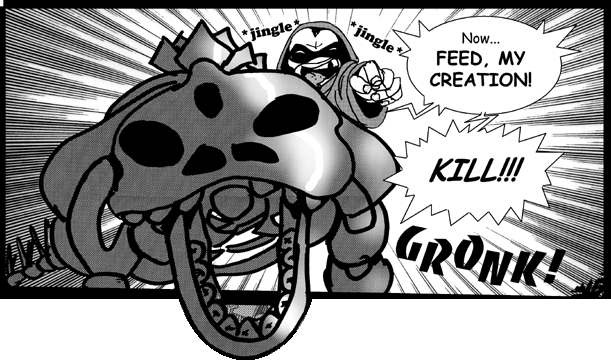
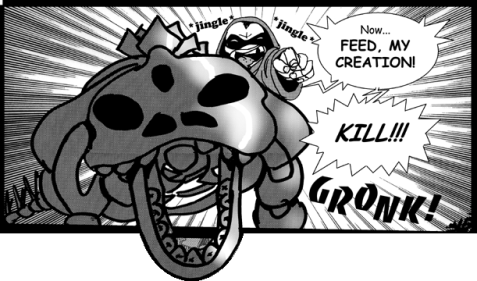
Aha! So, you know, I was going to resurrect the mummy, and then I saw the dinosaur exhibit, and then I thought, ‘That’d be a great idea,’ and then I was like, ‘I don’t know… it’s late, Deadringer, and you always make bad decisions when it’s late,’ and- well, to make a long story short, taste my Skelesaurus!”
dinosaur feast kill

Cue a Conflict.

Stakes: Deadringer- if he succeeds, he & the dinosaur break into the night to wreak havoc on New Manchester.

Once more, ask the players what’s in the room, and Roll for turn order.

Phase 0 –If you’re doing another phase 0 (no attacks), during Deadringer’s phase 0, he does the following:

Deadringer raises his Doom Bell and starts to cackle maniacally. “You think that stegi’s the only dinosaur I’ve prepared? Face the terror of my fleet-feeted- my fleet flooted –Oh, to heck with it. Arise Velociraptors!”

From the room arise half a dozen velociraptors, each a staggering… two feet tall.

Oh, Poo, they look bigger in the movie.”

The raptors run around the floor, nibbling on everything and getting underfoot. At the moment, they’re directed at you, but given time, they’ll likely get in EVERYONE’S way.

The raptors are an Aspect that cause an obstacle when moving from zone to zone (recommend Difficulty 2). Deadringer has a free invoke on the raptors, but any player can invoke it. Once a player has overcome the raptors, they won’t bother that player again for the rest of the scene. Players may also attempt to dispel or whoop the raptors completely (recommend Difficulty 4).

Skelesaurus Dinosaur – NPC
High Concept: Terrifying Undead Skeletal Stegasaurus
Aspects: Massive spiked tail; Don’t make it mad; Vegan at heart.

Skills:
+5 Physique & Fight (With 5+ players, make it +6)
+4 Intimidate, Wilderness
+3 Will, Notice

Stunts:
Stand & Take It – Skelesaurus can use Physique to defend against Shooting attacks
Monster – Skele gains +3 from Invokes instead of +2.

Deadringer – NPC
High Concept: Skinny little Necromancer
Aspects: Derives Power from the Doombell; Kind of a Weenie; Vengeful

Skills:
+5 Shooting (Death Magic)
+4 Athletics, Mythos
+3 Sixth Sense, Deceit, Notice, Intimidate, Will

Stunts:
Necromaniac: As long as he has his Doombell, Deadringer can create advantages themed on blood, spirits, bones, shadow, or anything else. These summoned forms can be invoked to help him as normal.
Slippery Devil – Deadringer gets +2 to Athletics when using Overcome to avoid being pinned down or held.