Fate Adventure: TOMB ENOUGH FOR TWO

Standard

For this week’s entry, I was going to just go through my toy box and make a bestiary entry based on that one monster. However, I realized that my toy box includes a massive amount of plastic skeletons that I have not had the pleasure of using yet. They’re vaguely Egyptian themed and sand-colored, and that reminded me of Frank Turfler Jr.’s Stuff for Storytellers and Game Masters Patreon, Patreon, which just released an Egyptian tomb tile set. (I bought into it myself to get a set, and wasn’t disappointed!) Thus, this week, we give you a mummy-tastic supernatural comedy one-shot adventure!

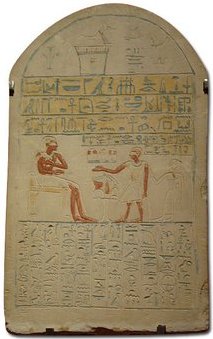
Waiter? Can you top me off? (Offering_vessel_of_Pepi_I.jpg - credits see below)

Waiter? Can you top me off? (Offering_vessel_of_Pepi_I.jpg – credits see below)
TOMB ENOUGH FOR TWO

Preface

Rules: This setting uses our own mod of Fate Core, named Skeleton Crew. However, I’ve included side-by-side swaps for using Fate Core. Likewise, it shouldn’t be too hard to convert to FAE or your personal hack.

Characters: This adventure does not include Player Characters- it’s assumed that you can make your own, or just drop this adventure into your current campaign. We recommend at least one character that is good in a combat (fight, shoot) and/or physical tasks (athletics, physique). We also recommend at least one character that is good at gathering clues (translators and archaeologists are ideal). If your group does not contain one of the above, it might be a good idea to add an NPC bodyguard or a professor that they can control. If you need some, there are plenty of pre-made characters in the Skeleton Crew RPG rulebook, and there’s still time to sign up for the free open Beta test (just send us a note.) Simple NPC enemies are provided, but feel free to alter them as you see fit.

Humor: This is a comedic adventure, although it might not show it at first. Humor typically works in one of two different forms: Short Form and Long Form. Short form has the humorous premise established pretty earlier, and revisits it constantly. (Example: like telling a string of light-bulb jokes.) Long form jokes build to the comedy slowly, so the joke is not obvious until near the end. An impatient audience may lose interested before the payoff, but sometimes the anticipation sweetens the final, comical reveal (Ex. the knock knock – banana joke. http://jokes.cc.com/funny-food-jokes/panmgr/knock–knock—-banana) This adventure is a Long Form joke – we advise all GMs to read the adventure before starting, so they have an idea of what the payoff is- however, do not give too many hints, as you don’t want them to get the full nature of the adventure until at least halfway through.

WARNING: SPOILERS BELOW! PCS READ NO FURTHER!


FLUFF: A team of archaeologists in Cairo were investigating a newly discovered catacomb. On the midnight of March 1, the skeletons and mummies they were studying sprang to life and attacked, driving the archaeologists off. No one has been able to enter it since, although those brave enough to get within earshot swear that they hear the din of combat. Are they training for combat, to take on the mortal world? Your mission: investigate the threat and secure the tomb.

(Relocating: If you don’t feel like trekking your team to Egypt, you could move the site: maybe it takes place in a History museum, or in the secret tunnels beneath the Luxor Hotel in Las Vegas.)

Waiter? Can you top me off? (Offering_vessel_of_Pepi_I.jpg - credits see below)

Waiter? Can you top me off? (Offering_vessel_of_Pepi_I.jpg – credits see below)
Egyptian_funerary_stela

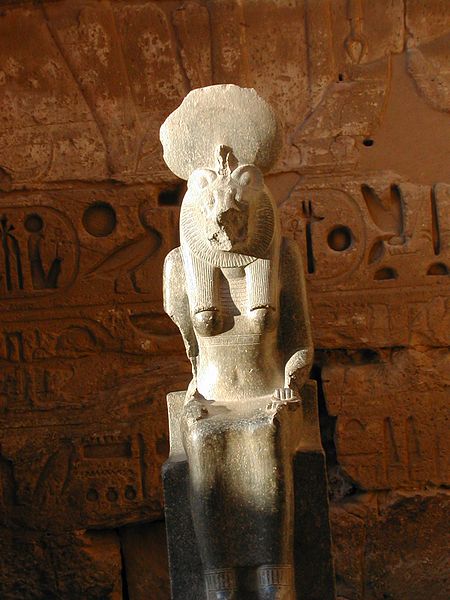
Maybe people in ancient times didn't have any arms. Look at the Venus De Milo.  (Haute_Egypte_Sculpture_au_crépuscule - see credits below)

Maybe people in ancient times didn’t have any arms. Look at the Venus De Milo.
(Haute_Egypte_Sculpture_au_crépuscule – see credits below)

What’s Really Going On: GMs, go ahead at the “What’s Really Going On” down at the bottom of the document. It will put the rest of this mystery in context.

SCENE 1 – THE SCUFFLE

As you approach the main entrance hall, the murmur of battle becomes a roar. In the entrance hall, there stand over a dozen skeletal warriors, fighting viciously amongst themselves. They seemed to be divided into two factions: half are bedecked in red and turquoise, half in black and green.

Conflict- The skeletons are too busy in their scuffle to talk, and will drag anyone close enough into the fray. Have the players recommend situation aspects for the chamber, and then start the conflict.

SKELETON FANATICS
There are two or four mobs of Skeletons, each with 3 skeletons in it.
Skeletons are puppets of dried bone, controlled by a necromantic magic from the outside.

Skeleton Aspects

  • Undead—Skeletons are undead, and as such, might have weaknesses to holy magic, silver, and other magical purities
  • No Pain
  • Rattling Bones.
  • Fanatical
  • Infighting!

Stunts:

  • Autonomous Parts—It is possible for a skeleton’s body part to keep moving, even after it has been severed from the rest of the body.
AVERAGE (+1)
Physique +1 and Fight +1 (per skeleton)
Stress: One stress box per skeleton

Conflict Special Rules: The two sides are fighting each other, but don’t openly have them roll to attack each other. Instead, at the end of any exchange after all players and NPCS have taken their turn, roll one fate die for each side: on a -, that side has one of the mobs reduced by 1 skeleton / stress, as the other skeletons take out one of their number. If you roll a +, ADD on stress / skeleton to that mob, as a previously stunned fighter rejoins the fray. Remember, the skeleton mobs also have the aspect “Infighting,” which can be invoked or compelled against a mob, to demonstrate the other side getting in the way.

Once the scuffle is over, the majority of the remaining skeletons don’t get up, having been returned to death or unconscious.

Any Investigation of them yields:

Physical Clues – They appear to be some form of militias, wielding cheap weapons like clubs and chains. The fighters have some cheap ornaments of bronze and clay, implying lower class.

Interrogation: If interrogating, see scene 2 for ideas about what they reveal.


SCENE 2 – The Locked Room

The next room is a dead end. Colorful murals decorate the walls, including two strong figures facing each other; the first, a female warrior, wears green & black; the male figure wears red & turquoise. Each carries a chalice. (Thorough Investigation yields: each figure is also holding an orb in their other hand.)

Very quickly, the group will realize that there is no obvious way through. There might be some sort of secret door… (spoiler: there is.)

Gathering clues: members can gather clues any number of ways, including:

  • Decipher the hieroglyphics on the walls
  • Communing with the dead
  • Interrogating any defeated fighters (assuming they speak Egyptian, have a high tech translator device, or are very good with reading body language).

When the players attempt to investigate (overcome rolls), they receive the following info:

Info A. Historical investigation – info about why everyone’s there, and what’s at stack. Depending on how well or poorly they decipher the reading, give them the Bad, Okay, or Good translation.

BAD TRANSLATIONS – Surface war fighters stork two. Victor eyeball control group cup of no death and army big-number [lost word] big-number.

OKAY TRANSLATION –There are two types of heroes must face fighters against each other . Victor have a cup of immortality and control the hordes 500 [lost word]

GOOD TRANSLATION – There are two champion fighters shall face off against each other. The victor shall possess the Chalice of Immortality, and control 500 legions [damaged word] 5000 years.

Info B. There is a secret door on one of the three walls.

Info C. Opening the Door – After they’ve slogged through the backstory info, they can find the info regarding the door. The inscription reads:

To open the door, one must speak the password.”

The password, of course, is Egyptian for “the password.” (If you’re interrogating someone, insert “Who’s on first?” routine here.) However, if the players struggle with this, you can also accept other passwords. Examples: “open sesame”; “swordfish”, “mellon,”etc. If players are STILL stumped, you can have them “discover” further hieroglyphics giving hints like, “the password is the password,” and “No, really, it’s password. Say password. Say it.”

Once they get through the door, they should arrive at:


SCENE 3. The Gates –

The next room is an antechamber of sorts, leading through a gate. On the other side appears to be a much larger chamber, perhaps an arena. Skeletons are lining up to get to the other side. [Inspection reveals: they are each holding crumbled papyrus papers.]

At the gate’s entrance are two MASSIVE figures: they are stone Sphinxes that have been animated through potent magic. They stand watch over the gateway, only allowing those with the papyrus papers to go through. If the players are to go through, they will have to get past the Sphinxes.

Getting past: It’s up to you and the players how they are to get past. If they attempt to get physical and fight or shove their way, we recommend you have the sphinxes beat them up for an exchange or two- after their butts are handed to them, quickly offer the chance for the players to concede, rather than be taken out. Players will have much better luck trying to bluff or talk their way through (mental conflict), try to steal tickets of their own (challenge), or try to slip past them (contest.)

SPHINX STATUES

Sphinx Aspects:

  • Stone-cold
  • No one gate-crashes ME!
  • Riddles? Better be a good one
  • Just doing my job

SKILLS

  • Physique +8, Fight +8
  • Will +4, Athletics +4
  • Empathy +3, Notice +3

STRESS
Physical: O O O O O
Mental: O O O

Stunts:

  • Shrug—May Use Physique to defend against any type of physical attack.
  • Nerves of Steel – Sphinx are immune to any Intimidation (Provoke) attempts from monsters trying to scare them with their appearance. In order to scare the sphinxes, you’d need some type of leverage.

If they can get past them in some way…


SCENE 4. The Arena –

Any groups that make it to the next area find themselves in a massive underground arena. Hundreds of skeletal forms sit in the stands, howling and cheering. In the middle stand half a dozen combatants, waiting patiently for the games to begin.

An announcer proclaims (in something that you can hopefully translate,) that the contest is about to begin. The winner of the contest will receive the Chalice of Immortality. The announcer also calls into the crowd to ask if there are in the audience brave enough to join in. (Hopefully, the players will willingly jump in; if not, it’s a great time to compel some aspect, ex. Having an angry PC get taunted by a combatant into jumping in; having a clumsy player slip over the railing into the ring.) Once you have a PC involved, ask if any other PCs want to jump in too.

The officiators divide the contestants into their own separate areas, and then hand them what they are competing with: BALLS & CUPS!! That’s right, the old children’s toy, involving getting the ball on the string to go into the cup.

This contest is held like a Contest between the pc against the skeletal contestants. The first side to catch the ball three times (3 victories) wins! The NPC contestants will not initiate any dirty tactics, but if anyone attempts to sabotage them, they will respond in kind.

SKELETON CONTESTANTS

Treat all skeleton contestants as one opposing force.

Skeleton Aspects

  • Undead—Skeletons are undead, and as such, might have weaknesses to holy magic, silver, and other magical purities
  • Infighting!

Stunts:

  • Autonomous Parts—It is possible for a skeleton’s body part to keep moving, even after it has been severed from the rest of the body.
FAIR (+2)
Athletics +2

Physique +1 and Fight +1

Consequence : One minor consequence box

If the players win, they move on to the next round! If they fail, they must either be removed from the field (but keep them close, if they want to crash the main event), or force them to give up something valuable to bribe the judges.


SCENE 5. THE FINAL ROUND

Afterwards, the players learn that the contest they just joined was the semi-finals. The finals will now start, between your players and the champions: two massive mummies. The first is Isit-Senaktemyet, clad in red and turquoise; and second is Neferfret, clad in Green and Black. The referees also roll out the Chalice of Immortality (which looks suspiciously like the Stanley Cup). If the players are eliminated, it might be good to repeat the part how the holder of the cup will gain control of 500 hundred legions.

For the final round, the ball-and-cup match has become full-contact! The champions wield giant ball-and-cup flails, with spiked metal balls. Technically, the rules are thrown out for this match, but the referees are a bit biased against the players, and can be compelled to get in the player’s way.

MUMMY CHAMPIONS
If life equals magic, than mummies are corpses with their internal life force preserved inside them by mystical rites. While some occur naturally, the greatest mummies are princes and princesses interred by dozens of powerful sorcerers, in the hopes they will rise again.

Mummy Aspects:

  • Undead—Mummies are undead, and as such, might have weaknesses to holy magic, silver, and other magical purities
  • Tougher than Jerky
  • Fire BAAAD!
  • Cup & Ball of Death (of Death)* – see stunts

Stunts:

  • Thick Skin—May Use Physique to defend against Shoot Attacks (except for fire or heat-based shots.)
  • Touch of Death (Good +3 only)—If the Mummy deals 2 or more Stress on an Attack, the defender must take a Minor Consequence, if it is not taken already.
  • Cup & Ball of Death – While the mummies are armed with the Cup and Ball of Death, they have Fight +5- if they can be disarmed, it’s lowered to Fight +3.
SUPERB (+5)
Physique +5, Fight +5* (see stunts)

Athletics +3;

Sixth Sense (Notice) +2, Intimidate (Provoke) +2,

Mythos (Lore) +1, Will +1

Stress:
Three stress boxes—a three shift hit is enough to take them out.
Consequences: Minor and Moderate Consequence each

Conflict Special Rules: Play to the crowd – While the whole “catch the cup in the ball” part is basically forgotten at this point, any character who still possesses a ball-and-cup may attempt, as their turn, to use create an advantage to catch the ball- if successful, it which drives the crowd WILD, resulting in a morale-based aspect. The first time this is used, the difficulty is only +2, but the difficulty increases each consecutive time by +1 (as the ball catches have to be increasingly fancy to catch the crowd’s favor.)


EPILOGUE – SCENE 6. THE CHALICE!

The last person standing receives the Chalice of Immortality-if several PCs still remain standing, have them decide amongst themselves who deserves it (by fighting or playing ball-and-cup if need be.) The winner is given the cup, with the entire stadium cheering. They will be a bit disappointed to learn that the gift of “immortality” is a figurative one- they will get their name engraved on the chalice and on the arena wall, and will thus “live forever” (except, not really.) Also, the 500 legions will follow the champion, should they still be around in 5000 years, when the skeletons next wake up. Even as that information is given to them, the skeletons of the area start falling back asleep, waiting until the next contest.

As a consolation price, the winner does get five skeleton fans, who stay conscious through sheer will power. These five will follow the new champion around, doing odd favors around the house, and carrying their equipment on adventures. The PC gains an aspect or stunt to reflect their new minions.


SPOILER:

What’s really going on: The skeletons and mummies have resurrected for a sports competition. The sport: ball and cup (the toy where you catch the ball in the cup.) Ball and cup might not have been an actual Egyptian game, but it’s still plenty old, so who cares? In this adventure, it’s as big as the Super Bowl or the World Cup, complete with diehard fans and football hooligans in the front room. (If this seems ridiculous, Rome actually had riots in the streets due to the fans of rival charioteers.) Tease this to the players without revealing it.


Join us next week- in honor of (Re)Generation Who convention, I’ll try a stab at something inspired by Doctor Who!


CREDITS

Offering_vessel_of_Pepi_I.jpg- by Hans Ollermann – from http://commons.wikimedia.org/wiki/File:Offering_vessel_of_Pepi_I.jpg – This file is licensed under the Creative Commons Attribution 2.0 Generic license. The licensor neither endorses me or its use.

Haute_Egypte_Sculpture_au_crépuscule – by Kikuyu3 – http://commons.wikimedia.org/wiki/File:Haute_Egypte_Sculpture_au_cr%C3%A9puscule.jpg – This file is licensed under the Creative Commons Attribution-Share Alike 4.0 International license. The licensor neither endorses me or its use.

Fate NPCs – Chimera Little Closer

Standard

After a month detailing Kickstarter set-ups, it’s time to get back to the fun stuff. This week: Chimera-mobs, a new format for Fate NPCS.

The Background

When creating NPCs for the Skeleton Crew Bestiary, I quickly ran into the following problem:

In order for an opponent to be a competent threat in a combat situation, it needed to have a few key skills. In my Skeleton Crew setting, these generally equaled:

  • Fight (to Defend against fight)
  • Agility (to Defend against shoot and fight)
  • Will (to defend against mental attacks)

Notice nearly makes the list- it’s not as essential, but too many NPCS without Notice basically means the players always go first. This becomes a problem in the following ways:

  • Relying just on the above is fine with a few NPC teams, but after a while, it becomes redundant.
  • Having NPCs with none of the above results in NPCs that are glass cannons at best and worthless at worst
  • Adding skills on to the above results in very complex NPCs with way too many skills at the same level (Jacks of all Trades), or tiered, mega-stunt enemies that are too much of a threat.

So, I started wondering: how do you create a villain that provides a variety of different flavors, but is not a super-strong “big boss?”

My proposal: Chimera-mobs!

How it Works

A chimera-mob is essentially an NPC character or mob that is stronger than the average mob, but weaker than a full NPC villain. It enters the scene like a lion, but once you get past the first layer, it becomes increasingly easy to defeat.

First off, decide how many “parts” are in your chimera-mob. For this first example, we’ll start with a three-sectioned beast (that just happens to be an actual Greek Chimera.)

Chimera-Whelp

High Concept Multi-headed Monster of Myth
Aspects: Wild Animal; Foul-temper, Fouler Breaths; Hates Pegasi, Alicorns, & My Little Ponies
Parts:

Lion Head – Fanged & Savage Snake Head – Quick & Alert Goat Head– Stubborn & Fire Breathing
Fight +5
Physique +4
Notice +5
Acrobatics +4
Shoot +5
Will +4
Stress: O O Stress: O O Stress: O O
Stunts: None
Consequences: Minor (2)

How the three parts work:

Skills: When the Chimera first appears, it counts as having all skills as max level (+5 or +4). Likewise, when any part of the Chimera is attacked or targeted by actions, it counts as having all available skills; for example, when Shooting at a healthy Lion Head, it still counts as having Acrobatics +4 (which it borrows from the Snake Head.)

Dealing Stress: If a PC deals stress to a chimera-mob, it is up to the GM to decide which part receives the stress. You can base on the narrative (ex. The PC goes directly for the lion head; A PC is attacking from behind, which would bring him closest to the Snake-Head-tail), or based on the defending skill (ex. A mental attack would blocked with Will, thus any stress would be dealt to the Goat Head.) Either way, if a part is dealt more stress than it has stress boxes, that Part is Knocked Out. If you deal enough stress to take out a Part and still have extra stress, it is NOT carried over onto the next part, unless your attack succeeded with style. (Note: we recommend each of the Stress boxes above equals 1 stress, just to make bookkeeping a little easier.)

Knocked Out: Once a part is Knocked Out, it has all of it’s Skills reduced to a mere +1. If it has any stunts, it cannot use them. Once all parts are knocked out, the chimera-mob is taken out.

Actions: By default, each chimera-mob can only take one Action each exchange. However, if a part has taken an action, a GM can pay a Fate Point to have a different part take an action this turn.

LET’S SEE THAT AGAIN!

We’re going to give you a second example. This time, let’s see it with a mob of different individuals forming a chimera-mob. This one will be split a little wider.

THE ZOMB SQUAD

When the evil liche Sarcophoguy needs a small crack team of combatants for a task, he summons forth the Zomb Squad. These elite zombies have lost their personalities and memories in the haze of undeath, but parts of their inborn talent linger on, making them a versatile opponent.

Figures courtesy of Twilight Creation's awesome "Humans!!!" game.

Figures courtesy of Twilight Creation’s awesome “Humans!!!” game.

High Concept: Zombie Professional Team

Aspects: Mostly Mindless; On a Mission; Rotting Shells

Rocker Cheerleader Surgeon Miner Mid-Level Manager
+4 Fight

+3 Provoke

+4 Acrobatics

+3 Rapport

+4 Lore

+3 Stealth

+4 Physique

+3 Craft

+4 Will

+3 Notice

Stress: O Stress: O Stress: O Stress: O Stress: O
Stunts: Rock Never Dies! – If the Rocker is Knocked out, your Fight becomes +2 instead of +1. Stunts: Ra-Raaahh! If successful uses Rapport to create an advantage to distract an opponent, it is applied to all PCs in the zone. Stunts: Reanimate – Once per scene, at the end of his turn, the Surgeon may pay one Fate Point to wake up a Knocked Out part and remove all stress on that part. Stunts: Pickaxe – +2 when using Physique to overcome physical obstacles. Stunts: On Task – Once per scene, may use Will instead of any other skill if it relates to their objective (ex. Will as Burglary if they’re sent to steal an object.)
Consequences: Minor (2)

When do I use a Chimera-mob?

As you can tell, it’s a chimera-mob can be as very simple, or amazingly complex (the Zomb Squat, for example, has five stunts!) However, they can provide a single threat that is a threat to most every teammate without feeling like a beefed-up supervillain.

Zones & Spacing

When throwing a Chimera-mob at a group, it works best to set the fight in a small area. In a narrow corridor, it’s easy to see how you can aim at Surgeon zombie, only to have the acrobatic Cheerleader-zombie leapfrog off of your head, making you miss your shot. In a much wider area filled with many zones, it’s a little harder to justify in the narrative how the Rocker can simultaneously be attacking a player on one side of a football field and defending for the Miner against a punch 100 yards down the field. As you might surmise, chimera-mobs also work well for GMs that run map-less campaigns.

So, tell us what YOU think! Have some Chimeras of your own?

Ecognomics – In the Home Stretch (Goals)

Standard

In what’s likely to be our last Kickstarter themed blog for a while, we’re going to focus on Stretch Goals and Backer Levels.

From the creator’s pov, the goal of a stretch goal is obvious: to make more money, or to fund further projects. Of course, if you wanted to fund further projects, you could theoretically start a second kickstarter. (And, if money was all you really cared about, you’d likely skip all of this hobby stuff and go become a stock broker.)

WHY A STRETCH GOAL?

What is the point of a stretch goal? Here are some reasons:

  • A stretch goal encourages backers of a lower level to reinvest at a higher level. This can be because of a new level is created (that wasn’t there before), or because a higher level has become increasingly valuable.
  • A stretch goal encourages players to spread the word of the kickstarter to others, as having more investors join will increase the value of a level for all backers.
  • After a project has been funded, the stopping point is more abstract. However, a stretch goal gives a psychological end point that a promoter can “push” people towards. Whenever a goal is met, it gives backers a feeling of accomplishment, much like leveling up a character in an RPG.
  • As mentioned above, a stretch goal allows a creator to fund further projects. The advantage to tacking it onto an existing kickstarter is that you already have positive momentum, with a captive audience of people who have already given you some funds, and might be interested in similar products.

WHAT MAKES A GOOD STRETCH GOAL?

Of the panels and articles I’ve seen, the litmus test I’ve seen for a stretch goal is a two-part question:

  • Does the add-on depend on the base project? (Rather than being a stand-alone product in its own right.)
  • Is the add-on finished or near finished?

If the answer to both of the above is “no,” then it doesn’t sound like a good stretch goal item. For example, if you’re selling an RPG rulebook, going through the work of writing a novel for the setting is a poor idea, as it involves as much work as the rulebook. (Of course, if the novel’s already finished and edited, that’s just fine.)

HOW DO I OFFER THESE STRETCH GOALS ITEMS?

There are three ways to offer stretch products to members through Kickstarter:

1. Add-Ons – When a stretch goal is reached, you can give members the option of adding the item on as an add-on.

  • Pros – The cost is easy to calculate; easier customization (i.e. mix & match items); anyone can do it!
  • Cons – Because it’s not listed in the basic backer levels, backers are more likely to miss it; because anyone can add it on, it doesn’t encourage members to increase their level to a higher one.

2. Added to Old Level – The item is added onto to an existing back level.

  • Pros- Pleases current backers; encourages those who haven’t backed to jump in; Good for small, no-cost items (ex. desktop art); increases backers at lower level to upgrade.
  • Cons – Doesn’t encourage current backers to increase pledge (unless at lower level); increases cost without increasing revenue (more on this later.)

3. New Backer level – When a certain stretch goal is reached, the creator adds a new backer level, which merges an older level with the new product.

  • Pros – Increases backers at lower level to upgrade; provides more revenue; easier to track cost of new item.
  • Cons – If not promoted well, older backers might miss the new level; done too excess, can make you look greedy; less backer customization of products than “add-ons.”

PRICE BREAK-DOWN: BAD EXAMPLE

Imagine if you will a fictional Kickstarter creator named Steve. Steve has a really BAD kickstarter stretch goal set-up; we’re going to do everything wrong, just to prove how wrong it can be.

Kickstarter name – KittehPower! – Steve’s fake kickstarter is about releasing a photo book of kittens wearing superhero costume pieces. It has a modest goal of $100.00 (which includes KS’s cut & taxes) and only two backer levels:

  • $5 – PDF – Backers get a digital copy of the KittehPower! Photo book.
  • $20 – Paperback – Backers get a hard copy of the KittehPower! Photo book. (Cost: $10.00)

Very early into the campaign, the goal is met (Steve is happy). So, Steve adds a stretch goal. He really wants to raise $100.00 so he can buy a cheap photo editing software- with it, he hopes to more special effects to his Kittehs! He adds the following stretch goal:

  • $200 – If we reach $200, we will add 20 new pages of kitteh pics in the book.
Photo by Krzysztof P. Jasiutowicz. This file is licensed under the Creative Commons Attribution-Share Alike 2.5 Generic license. Alterations made by Dave Joria, because he was bored.

Photo by Krzysztof P. Jasiutowicz. This file is licensed under the Creative Commons Attribution-Share Alike 2.5 Generic license. Alterations made by Dave Joria, because he was bored.

Flash forward, the $200 money gets raised! Steve is so pleased, he offers all of his cat-superhero-photographer friends (of which he has many) a chance to jump into the stretch goals- he wants to pay his friends $100.00 each to add their own photos to the book. He adds a series of stretch goals to the kickstarter for $100 each, all of them saying:

  • $300 / $400 / $500 (etc)- For each $100 that is pledged, we’ll add another 20 pages of Kitteh photos to the book.

Why this is a Terrible Set-Up:

The model above doesn’t take a lot into account. Such as:

  • Kickstarter Inc’s 10% cut and taxes. (Although, technically, the software might be fileable as an expense on Steve’s tax return, but that’s a whole ‘nother matter.)
  • Any backers who bought a book are adding $20 towards the stretch goal, but only $10 to the profit.
  • By adding more pages to the book, you increase the cost of the existing product without taking any additional money from the backers who’ve already bought it.

Assuming that each the first $100 was made by having 10 new backers buying new physical books, let’s see how much this stretch goal “earned”:

First Goal:
+$100 revenue
-$100 cost (software)
-$20 (KS’s 10% cut and taxes)
-$50.00 ($10 Cost for each new book)
-$15.00 (Assuming 20 color pages adds $1.50 to the 5 new and 5 old books)
= -$85.00

Now, if Steve got really carried away and reached $600 (initial $100 + five stretch goals), you end up with:

+$600 revenue
-$100 cost (software) (1st Stretch)
-$400 for friend photographers
-$120 (KS’s 10% cut and taxes)
-$420.00 (30 physical books, each now Costing $14.00)
= -$440.00

And thus, a successful $600 equals a huge deficit. Now, just imagine his goal had been for $6000 instead: he might end up with a negative $4-5K.

HOW TO AVOID THIS:

1. If you’re running a digital only or “print-it-yourself” model (see last week), you’ve avoided ONE of the pitfalls already, in that the only costs to consider are for the creators.

2. If you ARE dealing with physical items, only introduce new stretch goal items through add-ons (ex. Pay $5 more to get this keychain) or through a new backer level (ex. The Deluxe level for $50).This way you’re never increasing the print or production cost of an existing, already-paid for item, like Steve did. (Poor Steve. He’ll never learn.)

3. Include your stretch goal level to include all inherent costs plus MORE. I’d recommend double. Like the “stockpile” business model, this means that every stretch goal you reach is paying for that stretch goal and the cost of the next goal too.

STRETCH GOALS: GOOD SET-UP

Steve’s friend, Zara, is running a game kickstarter. She has reached her goal, and wants to hire a guest author to write a new adventure for the setting. It’s a little short, and uses new new art, so her guest and her agree on paying the writer $200 for the adventure (and that includes the editor too). For the following, we’ll assume that Zara is using only the digital only or “print-it-yourself” model.

$200 ~ Writer
+$50 (KS’s 10% cut and taxes- remember, divide by 0.8)
X2
= Stretch goal of $500.

This means if the goal is reached, the next guest writer, who is also paid $200.00, is already-paid for in the budget. This will likely mean that you have $200 that you, the creator, can pocket; but should something end up costing a bit more than you anticipated, you have a little more of a buffer to pay the guests.

However, Zara’s not going to give this PDF away. She’s going to encourage existing backers to increase their level:

$5 – PDF Version
$20 – Print-it-yourself Version + PDF
$30 – Print-it-yourself, + the Guest PDFs.

Resourceful, no?

STRETCH GOAL STRINGS

If you’ve met a few stretch goals, you could theoretically string them into a very long chain, giving your $30 backers an ever increasingly great value for their buck. This is what Evil Hat did with their campaign, which was amazingly successful. However, unless you really know what you’re doing, I would caution against this: while it gives lower backers a LOT of incentives to increase their pledge, it gives backers at the $30 level little reason to increase. I would instead recommend an alternative:

Soon, Zara’s first stretch goal (and thus, 1st guest author,) is reached, she introduces these two levels:

$20 – Basic – Print-it-yourself Version + PDF
$30 – Deluxe – Print-it-yourself, + all Level A PDFs

Level A PDFS – 
Guest PDF 1 
Mystery PDF 2 (Unlocked at $2000) 
Mystery PDF 3 (Unlocked at $2500)
Mystery PDF 4 (Unlocked at $3000)

Thus, the deluxe backers gain one extra pdf for $10 (not great, but not bad.) However, the players have an idea of how good the level will be (fingers crossed). As more stretch goals are unlocked, the extra value of level goes from theoretical to factual, and suddenly you’re getting 4 pdfs for $2.50 each- sweet!

Once the fourth pdf is unlocked at $3000, Zara opens a new level, Level B PDFS, and amends the backer levels:

$20 – Basic – Print-it-yourself Version + PDF
$30 – Deluxe – Print-it-yourself, + all Level A PDFs
$40 – Royale with Cheese – Print-it-yourself, + all Level A PDFs AND + all Level B PDFs

Level B PDFS – 
Guest PDF 5 
Mystery PDF 6 (Unlocked at $3500) 
Mystery PDF 7 (Unlocked at $4000)
Mystery PDF 8 (Unlocked at $4500)

And thus, players are encouraged to increase their level once more. Of course, you can only stretch them so far, but you get the idea. If Mystery PDF 8 is unlocked, perhaps the next goal squeezes a fifth PDF into both Level A & B (4.5 & 8.5?)- this will help satisfy your current backers.

WHEN DOES IT BECOME TOO MERCENARY?

No matter how many levels you make, always ask yourself: “Is the product worth it?” Paying $40 for several hundred pages of well-done, well-edited product sounds worth it- however, paying $40 for something you slapped out in an hour just so you can fill the obligation of one of those stretch goal slots is not. They might buy something you haphazardly publish, but they’re not going to buy it twice. That’s part of the reason raising that extra double for each author is nice: if you end up having to pay for a second author or editor, or find that the author turned in something twice the length (and thus twice the price), you can spend a little more to get a quality product.

Ecognomics – America’s Next Top Business Models

Standard

Last week, we crunched some numbers for different Kickstarter payoff models. To recap it slightly, if you were to pay your creators $2100, you would need the following number of sales:

PDF Model – To pay artists, need to reach goal of $2600, which would take 260 sales of $10 pdfs.

Book Model – To reach goal of $2600, need to sell 65 books at $40 each. However, to pay the artists $2100, you would need to sell 116 books (making your “real” Kickstarter goal about $4640.)

An accurate representation of our financial planning sessions.

An accurate representation of our financial planning sessions.

There are a few other business models to consider, though. One of which I heard of through Evil Hat’s Fred Hicks: the stockpile system.

STOCKPILE SYSTEM

It works like this: the sale price for a paper book is exactly double the cost. Now, in a PERFECT world, the “cost” of the includes the payment for the artists and writers, but considering how high the prices are for on-demand printing, for this demonstration “cost” will solely equal printing and shipping. We’ll assume for the sake of calculations that our staff is patient enough to wait for the payoff later.

Looking back at the printing price break, the books become much cheaper when you order 100 of more. So, let’s assume the goal of the kickstarter is to purchase 100 books from the printers. An individual book costs 15, including S&H to us, but we have to apply the 10% for taxes, and 10% for kickstarter’s take, so let’s divide $15.00 by .8, which comes to $18.87. That means we sell the book on kickstarter for double that, $37.50 (and assume any additional S&H to far off locations is added on by the backer.) We set the goal at 100 times the cost, or $1,887. (Compared to last model’s goal of $2600, that’s pretty modest).

Now, let’s imagine you reach the goal exactly: all it takes is 50 sales. Here’s the breakdown:

Revenue: $ 1887. Cost of 100 books: $1500. Taxes & KS’s take: $337.40. Immediate Profit: $0.

That’s right, the immediate payoff to the kickstarter is 0 profit. However, what the creator DOES receive 50 books that have been completely paid for (and the intangible benefit of having 50 books in the hands of hopefully happy customers, who will potentially buy more of your products and spread word of mouth). This means you can do whatever they want with these 50 books. You can sell that conventions or an online store, and keep every penny. They can drop them at the local game store, which might give the creator 50% of the profit.

So, let’s see what you get if you sell those 50 books:

Sale Cost (each) Total Profit Profit to Goal Ratio: Minus Artist Cost ($2100)
$20 (Consignment) $1,000.00 52.00% -$1,100.00
$35.00 $1,750.00 92.00% -$350.00
$40.00 $2,000.00 105.00% -$100.00

You’ll note, of course, that even at $40.00, you’re still short the estimated $2100.00 to pay the creators. Easy enough to factor in: if the sale of 50 books yields $2000.00, how many books do we need to plan for to make $2100?

50     x _X_

2000  2100

x = 52.5 post kickstarter book sales. We means we have to change our kickstarter goal to pay for 105 books. We could recalculate from scratch based on 105 books, but to save time, let’s cross multiply again. (Confession: Most math I learned in high school has been generally useless in my day-to-day life. However, when my elementary & middle school teaches always repeated, “you’re going to need this,” they were right.)

100   x 105

$1887     X

Which results in a goal $1982.00. Thus, we were able to take a kickstarter for under $2000, and turn it into $2100.00, while still giving Kickstarter Inc. and the IRS their share.

PROS of this Business Model:

  • You have much more control over the product prices.
  • You have a much wider span of time to sell the product, rather than depending on a narrow window.
  • Instead of profits, you could potentially extend any gains towards more books, extending it infinitely- using the profits from the first 100 books to buy the next 100, which buy the next 100, etc.
  • Potentially gives you a low KS goal, with a high percentage pay-off (compared to last week’s models).

CONS –

  • If you can’t make the additional post-kickstarter sales, you don’t get any money. It’s a gamble.
  • Payment Timeline – The cost, as this small level, doesn’t pay for the creators at first, which means they must wait for sales to pay them (and if I was an artist, *I* wouldn’t let someone pay me based on sales.) The only alternative is the project head pays the artists out of pocket and (hopefully) gets reimbursed for it later.
  • Reach – A Kickstarter is a great way to spread the word about a product, which will hopefully stay in people’s minds later. However, once the kickstarter’s over, you now have to fight to retain interest and to get people to buy your physical book. This means they have to buy through your website (which may need advertising to get people there), through a convention booth (which costs money), or through a 3rd party store (which will take at least 50% of the cover price.) Even the best game books in the world peak in sales after a few years.
  • Sustainability – In a perfect world, you could have each 100 pay for the next 100, on to infinity. In the real world though, there is a finite number of people who are willing or able to purchase your product. Any business model that is based on endless growth is unsustainable (e.g. Ponzi schemes, the Roman Empire).
  • Bookkeeping – Even if your artist IS willing to work for a share of the sales, this leads to some heavy bookkeeping. Our convention booth, for examples, sells lots of different products, which means you’d have to meticulous of how many of each book you sell and make sure that money doesn’t get mixed into the other company funds.
  • Tax-Timeline – If you earn $1887.00 money in one year (let’s say, 2015) and invest all of that money into the printers in 2015, you’re looking at relatively low taxes- you earned little-to-no profit, as it was offset by costs. However, if you wait until 2016 to pay the printer, your 2015 company income is not offset, so you’re paying a lot more. I don’t know exactly HOW much more, which is another flaw in doing this model- you might need someone who knows current business tax law for your state.

PRINT-IT-YOURSELF MODEL

The last model I’ll discuss has supposedly been around for a while, but to give credit where it’s due, I first saw it used by the Silent Legions Kickstarter. This is how it works:

This kickstarter requires your product to be available on a website that prints its own products. Most of these print stores let the creator sell the product at a higher price (ex. $40 for a book), but allow the creator to purchase it themselves for the cost (i.e. for their own resale.) A popular example of this is DriveThruRPG and it’s sister sites (DriveThruComics, DriveThruCards, etc.)

The “Print-it-Yourself” model works exactly like the PDF model, except that if gives the backer access to the same “at cost” rate as the creator. Here’s the version as Kevin Crawford phrased it:

Pledge $20 or more

GRIMOIRE COLLECTOR: Get immediate access to the beta PDF and get the full PDF when it is released. Get an at-cost code for ordering your choice of the softcover or hardcover POD print edition of the book from DriveThruRPG, which should come to about $11 for the hardcover and $6 for the softcover, plus shipping. In addition, you’ll get your name added to the list of special Kickstarter supporters in the PDF and printed book.

Pros of this system:

  • Buyers have the option of buying physical books (sometimes in hard or soft bound)!
  • There are 0 printing costs to the kickstarter host.
  • You can sell the pdf at one tier, and the “book” at a higher tier. (Mr. Crawford set his “pdf only” level at $10.)
  • You’re effectively selling a $26-$31 book under a $20 price tag, without decreasing your profit. Psychologically, it’s easy to sell (which is why items are labeled as $1.99 instead of $2.00).
  • The book cost isn’t included in kickstarter goal cost, which inflates the 10% you have to pay without increasing the profit.
  • Some companies, like DriveThru, use local printers, allowing them to keep costs to the backers the same in many different continents.

CONS of the PRINT-IT-YOURSELF Model

  • You are dependent on the limitations of the Print Store. For example, I’ve heard DriveThru’s color pages aren’t very high quality at this time. (Note: not from personal experience.)
  • Some people find it inconvenient (and they are not necessarily wrong.)
  • The printing cost of the individual books are potentially higher, due to the fact that you’re not printing in bulk.
  • The at-cost promo code would technically allow a backer to buy any number of your products at cost, rather than one. This means it kind of relies on the honor system, but as long as someone is not reselling them without our permission, I don’t really mind.

FINAL PLAN

Having crunched all of the numbers, I suspect that our first kickstarter, the Fate Accompli is going to fit into the Stockpile system- the art is relatively light, so it’s not like we need to shell out thousands for art and editors. The goal is to print at least 100 sets from a local printer- which means the first 50 sets off-set the costs of buying the next 50 sets. If people end up ordering more than 50, then we’ll likely take what’s left over from the cost as income to us *yay!*

With the next kickstarter, we’ll likely use the Print-it-Yourself model, as the extra art and editing raises the cost to the point that adding it in physical printing is just not viable. This every stretch goal gives 100% of the revenue towards the goal.

Next week – Stretch Goals!

Kickstart the Commotion: Ecognomics, Pt 2.

Standard

Last week, I talked about Ecognomics: the assumption that product = profit. Sadly, this is not always the case, unless you plot things out just right. Likewise, a successfully funded kickstarter can mean a product that is paid for, or a heck of lot of unforseen costs.

I’m going to run through a hypothetical kickstarter twice: once with selling electronic pdfs, once with hard books:

Electronic Version – Here’s the neat thing about pdfs… because there is no physical cost per unit, selling one costs as much to the vendor as selling one-million.*

*Assuming you go through a 3rd party to handle downloads and bandwidth cost.

However, this also makes them deceptively tricky, for a few reasons.

1. For the above reason, it can be difficult to convince someone to buy a pdf. If it cost the vendor nothing to give away, why should someone pay $1, $5, $20 for it? This argument is not without some merit- personally, I find it ridiculous that book publishers insist on charging the same amount for an eBook as a physical book; it makes sense to deduct the cost of the paper and shipping and handling, and then pay what is left over.

2. Buyers aren’t the only ones who are unsure about the price tag. Because it costs you nothing to give it away, a generous creator’s instinct might BE to give it away. This is doubly so if they are struggling to find buyers. To quote the Barenaked Ladies lyric, “Can’t even give this stuff away, why would I sell it?”

The reason WHY you have to sell it lies in the old adage: TIME IS MONEY. Now, I advocate humans creating whatever they want, for their own joy and sanity. Creating can bring a state of mental peace or catharsis that cannot be quantified- just because a poet gets published and paid money doesn’t mean that their work was better than the Emily Dickensons of the world who choose to publish little, if at all.

However, if you DO decide to seek money for your creations, make sure you’re not underselling yourself. If you were paid minimum wage for every figure you painted or every campaign you wrote, you’d soon find out how much your work is worth.

A few weeks ago, Morris posted what an rpg writer was paid per word around the industry. http://www.enworld.org/forum/content.php?2301-What-s-a-Freelance-RPG-Writer-Worth#.VNwTtfnF-Sr

Using this as a basis, let’s take a look at the cost of the Skeleton Crew book, which currently around 105,000 words.

Publisher Pay per word Cost of 105,000 words Cost divided over 100 pdfs
Paizo $0.07 $7,350.00 $73.50
Wizards of the Coast $0.06 $6,300.00 $63.00
Evil Hat $0.05 $5,250.00 $52.50
Pelgrane Press $0.04 $4,200.00 $42.00
Goodman Games $0.03 $3,150.00 $31.50
Fat Goblin Games $0.02 $2,100.00 $21.00
Purple Duck Games $0.01 $1,050.00 $10.50

Now, I’m not certain what’s a fair price for a PDF, but I feel pretty certain that asking 73.50 is a bit much. That being said, many modest, first-time kickstarters are lucky to get 100 backers- and at 7 cents a word, that “free” pdf costs quite a lot.

However, as I am a humble guy who wants this kickstarter to succeed more than I desire money, let’s go with the lowest pay rate for myself, aka. .01 a word. That makes the foundation of our kickstarter at $1,050.00.

However, I can’t do the book by myself. We have one of our group members working as editor and publisher, who’s going to work damn hard on the book too. Let’s assume that this person is a saint, who will take a fraction of the cost of a professional. Let’s estimate the total pay: $350.00.

New total: 1400.00.

Next, the art! Our in-house artist charges $40 for a B&W art… let’s assume that we commission her for 15 pieces. We also pay her for a full color cover, bursting forth with tons of different characters (those cost extra), for $100.00. That’s $700.00 for the art.

New total: $2100.00.

Done, right? Wrong! Don’t forget taxes- kickstarters count as income! Our accountant isn’t here, so we’ll set it at a flat 10%. (Now: $2310.00.) Also, if you reach the goal, Kickstarter takes 10%. That means add an extra 10% on, right?

Wrong again, because math is WEIRD; adding an extra 10% (2541.00) and taking 10% again leaves you with 2286.00, about $25 short. To make sure you have enough after Kickstarter takes their cut, here’s the formula:

Kickstarter goal = amount you need / divided by .90.

In this case, the result is $2566.67.

Let’s round that up to $2600.00, just to have a buffer.

So, what does that mean? Well, let’s look back at the pdfs, and see how many we need to sell at what cost to reach that goal.

PDF Sale Cost $ Raised at 100 $ Raised at 200 $ Raised at 500 $ Raised at 1000 # to Sell Reach Goal
$1.00 $100.00 $200.00 $500.00 $1,000.00 2600 sales
$2.50 $250.00 $500.00 $1,250.00 $2,500.00 1040 sales
$5.00 $500.00 $1,000.00 $2,500.00 $5,000.00 520 sales
$7.50 $750.00 $1,500.00 $3,750.00 $7,500.00 347 sales
$10.00 $1,000.00 $2,000.00 $5,000.00 $10,000.00 260 sales
$15.00 $1,500.00 $3,000.00 $7,500.00 $15,000.00 174 sales
$20.00 $2,000.00 $4,000.00 $10,000.00 $20,000.00 130 sales

Of course, the first time you glance at the chart, it might seem that charging more money is the key. However, you’ll notice the catch that, even at $20.00, it takes 130 sales, above your average 100 backers for a newbie kickstarter, just to reach your goal. Even if your product is good, you got to ask yourself: is it harder to convince 100 people to pay $20, or to convince 200 people to pay $10? I don’t really have the answer to that, but I know that the more your kickstarter extends to people who know you and your products less and less, you’ll have a harder time convincing people that the product is worth the money.

Paper-version – if you’re going with a paper-version, the rules of the above stay the same, except every price now has the price of the product, the shipping and handling added on to it.

Let’s assume your company is printing small batches, and going through a domestic printer. In this, let’s take a great company, Ka-blam, that prints our comic. A massive book of 350 pages, with B&W interior and color cover, costs 11.50 for one book. There’s a price break at 25 copies (10.50), and at 100 (9.50). Add in a round 3.50 for shipping and handling per book, that gives you: $15 at 1, $14 at 25, $13 at 100.

For example, the same above chart, adding the same values above:

Add to Cost: Total Sale Cost 1 Revenue at 25 Profit at 25 (-350)
$5.00 $20.00 $500.00 $150.00
$10.00 $25.00 $625.00 $275.00
$15.00 $30.00 $750.00 $400.00
$20.00 $35.00 $875.00 $525.00
$25.00 $40.00 $1,000.00 $650.00
Add to Cost: Total Sale Cost 1 Revenue at 100 Profit at 100 (-1300.00) Revenue at 200 Profit at 200 (-2600.00)
$5.00 $20.00 $2,000.00 $700.00 $4,000.00 $1,400.00
$10.00 $25.00 $2,500.00 $1,200.00 $5,000.00 $2,400.00
$15.00 $30.00 $3,000.00 $1,700.00 $6,000.00 $3,400.00
$20.00 $35.00 $3,500.00 $2,200.00 $7,000.00 $4,400.00
$25.00 $40.00 $4,000.00 $2,700.00 $8,000.00 $5,400.00
Add to Cost: Total Sale Cost 1 Reach Revenue $2600 Cost at Goal Profit at Goal
$5.00 $20.00 130 sales $1,690.00 $910.00
$10.00 $25.00 104 sales $1,352.00 $1,248.00
$15.00 $30.00 87 sales $1,218.00 $1,382.00
$20.00 $35.00 75 sales $1,050.00 $1,550.00
$25.00 $40.00 65 sales $910.00 $1,690.00

So, let’s imagine a hypothetical situation: you got exactly 200 sales. Let’s see what it comes at various prices:

Cost – Remember, this includes the approximately 20% for kickstarter and tax.

Product Revenue Reach Goal? Reached Goal at Cost Profit
PDF $5.00 $1,000.00 No! N/A None None
PDF $10.00 $2,000.00 No! N/A None None
PDF $15.00 $3,000.00 Yes! 174 sales -20% (-$600) $2,400.00
PDF $20 $4,000.00 YES 130 sales -20% (-$800) $3,200.00
Book $20 $4,000.00 Yes 130 sales -20% (-$800), – $2600 (books) $600.00
Book $30 $6,000.00 Yes 87 sales -20% (-$1200), -$2600 (books) $2,200.00
Book $40 $8,000.00 Yes 65 sales -20% (-$1600), -$2600 (books) $3,800.00

Based on the 200 sales model, we can see that selling 200 $1 pdfs gets equals a failed kickstarter; whoever, a kickstarter that sells 200 pdfs at $15 each makes the same as a kickstarter that reaches $6000 selling books at $30, and makes four times the profit of a campaign that sells 200 books at $20 bucks.

One last chart: let’s see what happens if we calculate that each product level made EXACTLY the number of sales it needs to make to reach goal.

Product Reached Goal at Cost Profit
PDF $5.00 520 sales -20% (-$520) $2,080.00
PDF $10.00 260 sales -20% (-$520) $2,080.00
PDF $15.00 174 sales -20% (-$520) $2,080.00
PDF $20 130 sales -20% (-$520) $2,080.00
Book $20 130 sales -20% (-$520), – $1,690 (books) $390.00
Book $30 87 sales -20% (-$520), –$1,218 (books) $862.00
Book $40 65 sales -20% (-$520), –$ 910 (books) $1,170.00

And thus we see how kickstarter goals are really sneaky, in that they measure only revenue, not cost. Adding higher priced goods at higher costs can make you reach your goal faster (the $30 book needs half the sales of a $15 pdf). And reaching a goal is GOOD- backers are more likely to sign up if the goal is reached, so the profits are more likely to come in. However, at the $30 book level, the artists end up with a mere 1/3rd of their self-estimated cost, and less than a 1/4th of what they raised from the kickstarter.

Luckily, this is not the ONLY model for a kickstarter- we’re going to explore a few of those next week.

In the mean, if you’re in the DC Metro Area, you should visit our booth at Katsucon this weekend, Feb 14-15th, in the Artist
Alley! It’s the first anime con featuring our newest book, the Cleric’s Guide to Smiting! Come on down!

gazebo

Ecognomics of a Kickstarter

Standard

Later this year, our group hopes to launch a grand kickstarter for

the Skeleton Crew PRG. We’ve got high hopes. We’ve got big dreams. We want to do it just right; so much so that we’re launching a second kickstarter before it, just to test the waters. I’ve read all of the blogs, heard the panels.

I am still shaking like a newb.

So, this is not a blog from a kickstarter veteran, saying how they got all-the-moneys. Rather, this is the step-by-step brainstorm, so you can see the planning process for yourself… specially, in how to avert Ecognomics.

What are Ecognomics?

Some of you might be old enough to remember the South Park episode with the Underpants Gnomes. If you’ve never seen the episode, the pivotal scene with them plays out as follows…The underpants gnomes, after amassing a large amount of stolen underpants, present their cunning business plan:

Phase 1. Collect underpants

Phase 2. ???

Phase 3. Profit

It’s a silly bit, but I’ve heard that economists and business theorists have actually latched on to it in serious lectures. Personally, I call it “The Underpants Plan,” or Ecognomics.

Who is Guilty of using Ecognomics?A lot of independent artists and creators, sadly. I’ve been on a lot of web comic panels, in which someone in the audience asks, “How do you make money?” The knee-jerk reaction from artists is to laugh, but that could be out of nervousness.

The problem is many creators think that there’s a direct correlation between Product and Profit. They have Phase 1 and Phase 3, but they fail to consider part two. Of course, at least those artists have gone ahead to think about Phase 1: a Product. I remember before the Dot-com bubble burst, some people thought you could launch a website, slap a Paypal donation button on it, and they’d be showered in money.

With Kickstarter, the same pitfalls occur. There are people who think that all they need is a product, launch a kickstarter, and you’ll have a profit. (Again, some don’t even think too hard about the product.)So, I don’t have all three phases planned out, but I’ll walk you through my ponderings.

PHASE 1 – COLLECT UNDERPANTS (Figuratively Speaking)

The first part is to clarify what the product you are selling is. With us, we’re relatively confident about this: it’s an rpg book, using the Fate Core rule system. The setting is based on our webcomic series, Skeleton Crew. Of course, there are still a few things to figure out.

Labels – This issue is mostly resolved, but it wasn’t when we started the project: we had to clearly define the genre of the setting in order to best promote it. We originally called it “Comedy / Horror,” but that didn’t seem to go over well. While there are definitely a few horror elements in the comic, and optional rules for running scary adventures, my cowriters convinced me that the “horror” tag wasn’t accurate. We’re now promoting the rpg as “Supernatural Comedy.”

Stand Alone or Supplement – Shortly into the RPG’s production, we settled on using Evil Hat’s Fate system- it wasn’t too crunchy, we (a bunch of writers) loved the story-telling basis, and the creators were generous to offer it to the Open Gaming License, making it free to use. To add icing to the cake, the Fate Core kickstarter practically exploded.

hipster elves

<hipster moment> Yeah, you heard me- we liked Fate BEFORE it was cool </hipster moment>.While I’ve seen a few kickstarters that offer to add other systems on as a stretch goal, we have decided NOT to make SC for any other system at this time (except a possible FAE side version). If your book can be so easy ported from one system to another, then how much attention did you really pay to that system?The question becomes whether to make it as a “supplement” or as a stand-alone. It’s a fat book already, roughly 350 pages. To make it a “stand-alone” book would require adding additional 100-200 pages, greatly raising the print cost. It would make it more accessible to newcomers, but most of our target audience is experienced gamers who already own the Fate Core rulebook anyway. We’re polling playtesters for their opinion. Speaking of which…

> Playtesters & edits– The last steps are to playtest the stuffing out of it, and edit the feedback into a cohesive book. Easy, right? *nervous cough*

That’s it for the Underpants. On to…

PHASE 2 – ??????

If this were a REAL economics plan, I suspect the middle area is for revenue. For non-business folks like me, that’s “money made before factoring cost.” In regards to kickstarter, it also means, “having a variety of backer levels and add-ons, providing each backer an opportunity to spend exactly the amount of money they are willing to part with.” If the only levels are cheap, you risk losing potential profit. If the only levels are expensive, you risk it all. I’m leaving the ???? in, as it also covers all sorts of other pre- & mid- Kickstarter factors. Like most brainstorms, and keeping with the ‘YES AND’ spirit, the “????” section shall include any ideas, no matter how ridiculous. This is the “yes, we can!” section… (save the “no, we can’t. Really.” for the “Profit” section.) I’ll start with our thoughts for the kickstarter levels.Backer Levels – The first thing to consider for the kickstarter is the basic backer levels. These are the Core levels, ignoring other “throw in one more thing!” Here are the very basic, platonic levels:

  • Impulse Buy
  • Electronic Version
  • Paper Version
  • Special Edition
  • More Money Than God Version

Impulse Buy – Costs a very small amount, which is very good for people who are unsure of the product, broke, or are generous relatives who want to help but could care less about the product. For our version, I think we’re going to take a lesson from Tianxia’s fantastic kickstarter, and give anyone who pledges a small amount ($1-2) gets a copy of the rough draft Beta rulebook pdf. It’s a great way to lure impulse buyers, costs us nothing, and gives the backer a product immediately after they pledge (rather than having to wait for months until the product is finished before the backer receives anything.)

Electronic Version – A digital version- in this case, a pdf of the finished product. Fortunately, Tangent Artists is lucky enough to have a publishing miracle-worker on team, so the layout can be done in house. A pdf is beautiful thing, in regards to profit, but more on that in Phase 3. At the moment, the goal is to have a B&W book with lots of art. For a creepy setting like ours, B&W is perfect, in that it helps capture the mood, and easier on the artists. We plan to have original art by one or two artists, supplemented by art from the webcomic itself. This would likely be in B&W, although, if we’re pulling images from the webcomic, we COULD make the pdf B,W & red.

Paper Version – A physical version of the book printed and mailed. Unless we hit ALL DA STRETCH GOALS, it seems unlikely that the supplemental material will be in print form.

Special Edition – This would be supplemental material tied in directly to the product itself. Some brainstormed ideas:

Art – Prints of the art itself. (May not do this, as shipping art without creasing it is a pain). Maybe the cover art for the book?

Comics – We’re hoping to do a big compilation book of our first few issues of the Skeleton Crew Comic, in a volume called the Necronomnibus. Likely in B&W, to save cost. Luckily, this one doesn’t require much in the ways of creating a new product, which is nice, and it printing in bulk is much cheaper than individually.

-Gaming Extras – If our Kickstarter for Fate Accompli, dry-erasable Fate cards, is successful, then these would be a great add-on.

-Artsy Odds-and-Ends – Any other art-related material, such as keychains, postcards, etc. As I am not an artist, I won’t insist on these, nor will we make these a priority if there’s not demand for it.

However, I remember one kickstarter panelist, who shared a great nugget. He advised against writing new novels as stretch goals to an rpg book. This was his litmus:

– if the supplement is stand-alone (i.e. doesn’t require / build on the base kickstarter), and requires work as much work to finish as the base kickstarter, why doesn’t it have a kickstarter of it’s own?Thus, adding a stand-alone novel is way too much energy to invest on something that doesn’t add to the product. (Of course, if you wrote the novel already, that might be a different matter.)
-Rules Supplements – This is where I have even BIGGER plans and schemes. Here are some wild ideas. These would expand the current rules for new locations and subgenres. Some of the ideas we’re batting around include:

– Guest Authors – Getting outside authors to write additional material for the setting. If we can get well known authors, to draw in more backers, all the better. And while we’re dreaming the impossible dream, we even hope to PAY our staff and guest authors. This would definitely beat the old system of having writers work for free, for credit, or for reassurances that their loved ones will be returned safely (mwah ha ha).
-Adventures – One-shot adventures for players. I’ve definitely a few that I’ve run before that would be great, including Fright at the Museum and the Revenge of Blackstache.

– New Locations – A fairy-focused setting, set in the West Coast, written by our very own Rachael. Several working titles, including “Triskelion.” We’re also considering: a Road Trip Campaign book (WIP title: Highway to Hell, Globe-rotters), with scatterings of monsters from all over the USA or the world; also, a setting focusing on beings from Japanese and Chinese myths.

-New Sourcebooks – A Lovecraft book (because, as we all know, if you want a kickstarter to succeed, throw in an Old One)… the working title is “The Madness of the Color on the Doorstep of the Dark”; a sci-fi 1950s B-movie book “It Came From Science!”; a source book on ancient religions, demigods, demons, cambions, nephilim and angels; a setting in the land of Cockaigne.

-New Twists – Several ideas: Paranormal Investigators – A procedural, monster-of-the-week setting, a la X-Files & Nightstalker. Would likely use a system similar to Atomic Robo’s “Brainstorm” mechanic, assuming our version wasn’t TOO similar (Robo isn’t in Open License); a rule-set for familiars and lesser demons, with a Pokemon-esque “snatch-em all” rule set; Giant, city-smashing monsters (because: giant monsters).

-Rule Adaptations – Attempts to incorporate existing rules from other Fate Core games into SC, assuming we are not violating or infringing on any rights. These might include: Skill modes; super powers / super stunts; Fate Accelerated version.

– Supplemental Info – Languages – A guide to the many real (and fictional) ancient languages, from Rongorongo, to Atlantean, to Epoch. Might have rules, but possibly rules agnostic.

– Characters – Extra mortal states and professions that didn’t fit in our (already bulging) rulebook. We might release it by itself, or might save some of the characters to drop in with supplements that fit the theme.

-Campaign Books – Fate doesn’t really lend itself really well for pre-made campaigns, but I would enjoy an expanded setting based on the Lost Continent of Lemuria.

More Money Than God Version – Generally, these are levels that most people can’t afford, but would be fun anyway. And since we’re not throwing out any ideas here:

– Personal Touch – I, Dave Joria, will official skype / drive / fly / paraglide to your living room or game store to run a game for you.

– Commission Normal – Our artists will draw every member of your party.

– Commission – Published! – Our artists will base one of the character designs in the finished book off of one of the pre-constructed characters off of YOU.

-Comic Star – We will write and draw a 4-page comic based on your skeleton crew characters.

– City of Dreams – I will create a brand new city location just for you and your party.

– Sup it Up – I will design an entire supplement for YOU- rules, characters, monsters, settings, plot points, you name it, we make it.

– We’re Really Reaching Here – I will dress as a zombie and do a happy little dance just for YOU!

– Unholy Rites – I will build a dark shrine to your honor, and sacrifice a goat, chicken or watermelon to you, while chanting in an Eldritch tongue (and film it.)

That’s all of the odd-ball ideas I have for the moment. Next year, I’ll be crunching Phase: Profit!

GAME CRAFTING – LOSE YOURSELF IN YOUR WORK

Standard

In which Dave gives you a preview of the card game Dystopio, and a strange approach to the creative process.

Let me start, as is befitting a member of the group named “Tangent Artists,” with a little background. I have a friend who’s writes fiction as a hobby. While she publishes a small portion of it, she is less than enthusiastic about the rest… so she DELETES IT. Removes it from her hard-drive and the world, never to return. The very idea of this keeps me up at night. That is an act of heresy on par with wrapping myself in a burning flag while clubbing an orphaned baby seal with a crucifix and cursing at my grandmother. It’s simply not done.  I never throw away anything I write: my hard drive contains old ClarisWorks and .txt documents from the dawn of the internet. I have three composition notebooks containing a novel I wrote by hand during NaNoWriMo, which I have yet to transcribe into digital form (I’m holding out for a cheap voice recognition software). I have tiny pocket notepads with the home-made Magic the Gathering card ideas I dreamed of during middle school history classes (Wizards? Call me!). I throw nothing away.

Sadly, “nothing” includes non-literary items too. I’m a terrible packrat, with no sense of organizational skills. I have an orange Home Depot apron that I keep in my closet just in case I need it for a costume someday. I have stacks of Styrofoam packing lying around, in case I want to make scenery for a game I never play anymore with friends who want to play it even less. It may have some advantages (my car always seems to have a silly hat in it, and not by design), but it also makes finding stuff an ordeal.

photograph by Николай Аввакумов,  distributed under an Attribution 3.0 Unported http://creativecommons.org/licenses/by/3.0/deed.en

photograph by Николай Аввакумов, distributed under an Attribution 3.0 Unported http://creativecommons.org/licenses/by/3.0/deed.en

Flashback a little less than a year ago: Around the same time this blog started up, I started working on a new card game. I was inspired by Stalin’s 5-Year plans; his first five year plan took four years, his second took seven. It reminded me of the Eddie Izzard line about Microsoft:”lt’ll be done by Saturday… Tuesday… next week…  We’ll bring it out when we’re *%$#ing ready, right?” To me, there’s something darkly comedic about the whole thing, resulting in a game about players trying to create the most brutal and oppressive regime they could. The working name of it is Dystopio, and we’ve made sure to pepper with allusions to serious works like 1984, A Brave New World, and Fahrenheit 451, as well as pop culture settings like Tank Girl, Judge Dredd, and Death Race 2000. I made spent a weekend making mock-ups on index cards, played it with the Tangent Artists, and took notes on the feedback.

AND THEN I LOST IT.*

Earlier this month, our group was planning to go to Brunswick Games Day, where I had hoped to run a pick-up game of Masters of Umdaar. However, I had also planned to test Dystopio out, but was unable to find the mock-ups.

“Hey, no worries, I’ll just write them down again.”

To my horror, the only notes on my computer were nearly a year old. They had my rough brainstormed ideas, but nothing concrete.

I remembered the basic mechanics: every player has a Plan. It counts down from 5 to 0, going down by one each turn. If it reaches the end and the player possesses the necessary Projekts (one specific one, and one general one), then the player wins. If the player doesn’t possess them, then the Plan fails, and the player has to start at year 5 with a new plan.

Example Plan: Human Hatcheries. Requirements: Projekt – Genetic Engineering + 1 Ministry of Education Projekt.

Of course, my notes didn’t have the A + B = C information… all I had was my rough list of dystopian themes and several different names for ministries (in honor of George Orwell, the British term “ministry” sounds more imposing than the American “department.”) So, I rewrote them from scratch, brought them to the show, and ran a few games, and got more feedback.

And then I found the old cards.

THE MORAL OF THE STORY

You hear all of the time about editors and English teachers saying, “write it again.” For a packrat like me, that’s harder than it sounds. Our work is our children, and even when trying to write from scratch, I’d intentionally try to make it close to the original as possible. Even in our brains, we are packrats, refusing to throw anything anyway.

Now, I would never advice you intentionally lose your notes. Likewise, I understand that certain projects have a deadline that doesn’t allow you months to forget your previous phrasing; but the end result is fantastic.

Essentially, I now have two complete versions of the game to compare with each other, picking the best of both. It’s like having a co-writer that happens to be you. Unintentionally, I was renaming weaker cards and coming up with odd rules that I wouldn’t have come up with before.  Here are some more examples:


Old combo: Gov-recreation drug + Ministry of Facts Projekt = Touchies Movies 

New Version: Recreatio-Drugs + Ministry of Safety Projekt = Super Soldier Steroid.


Old: Mandated tv + Ministry of Freedom Projekt = Murderball 

New: Mass Diversion + Ministry of Safety Projekt = Murder Sports


When in doubt, it also means that losing a work is not the end of the world. Even if it’s not quite the same, that may be a blessing in disguise. One way or another, that idea is like Minerva, buzzing around in your skull until you let it out.

Happy crafting!

* I lose a lot of stuff. I sadly missed posting last week because I wrote an entire blog post on my laptop and, you guessed it, lost the laptop. It turned up in coworker’s car.

Paranormal Investigation Tool – Follow the Bread Crumbs

Standard

I’ve been working hard on a new aid for Paranormal Investigation games this week, and haven’t got a chance to make a new post. So, to kill two birds with one stone, I’m giving you a sneak peak of the work in the progress. Presenting:


THE BREAD CRUMBS GENERATOR!

researcher discovery

BREAD CRUMBS – A PARANORMAL INVESTIGATIONS CLUE GENERATOR

The goal of the “Bread Crumbs” system is not to create a full adventure for you- like any Fate Core game, it requires some creativity of your group’s part. Rather, it’s here to help generate clues and ideas. It’s really up to you, the gm and the players, to string together the relevant bits into a narrative.

Will this fashion a masterpiece of mystery, the likes of Agatha Christie? Nope. But it’s great for your average, “villain of the week” style one shot adventure.

HOW DOES IT WORK?

The Bread Crumbs system uses a principle called Apophenia, which Wikipedia defines as: “is the experience of seeing patterns or connections in random or meaningless data.” In essence, we start the group with a crime scene. At the scene is a murder victim, killed in a specific way, an item, and a few random sensations. Let’s say you get “a bullet to the chest,” “a banana,” and “a strange sense of well-being.” What’s the connection between them?

At the start, absolutely nothing. However, as you question witnesses, follow hot leads, and uncover more clues, (ex. More bananas, and a huge pile of cash), your group can now start putting it all together.

Maybe they discover a ring is smuggling street by magically transforming them into bananas. Maybe a Love God / Goddess from a Tropical nation is luring greedy banana-republic salesmen to their death. Maybe the banana’s a red herring, planted there to by the NecroCats to frame their worst enemies, the Were-Gorilla gang!

But how do I come up with the connections? Hopefully the players will provide connections on their own, but if not, we recommend some source books on the symbolism of various objects. It also helps to brush up on your mythological beasts: if the random chart generates feathers and talon-marks, you might decide to make the monster a cockatrice and drop a few cockatrice-themed clues along the way (ex. County fair with a rooster that lays eggs.) Most importantly, keep an open-minded. Don’t pick the weirdest theory for the villains, pick ALL of the weird theories!

This also combos well with the Brainstorm system introduced in “Atomic Robo RPG.” We will be releasing a similar, Investigation based system in the near future.

QUICK (AND THE DEAD) MISSION BUILDER

Before you start, make sure you create characters

Create Urban Legends – have each player and the GM create at least one each (although, if a player’s feeling creative, don’t put a maximum.) Some of these (or all of them) may not show in the story, but it’s nice to get ideas before you start.

Generate a Mystery (see below)

Go to the scene of the crime and Investigate. Generate a Location

As soon as you get there, start making supporting characters. Make sure you include a Face character or two for every organization and location. Don’t just have a random cop, have Carl the Chubby Meterman. If the murder’s in a back alley, have the owner of the restaurant Greasy Ginny, already answering questions to one of the detectives. These people seem incidental now, but could end up your suspects, eye witnesses, allies, enemies, and potentially future victims.

The team then gets to scan the scene for clues. Each character may attempt to use an appropriate skill to survey the scene. Investigate is the best skill, but Sixth Sense can be used to pick up Sensory Clues, and certain and situations allow characters to use other skills (ex. A stunt that lets a mad scientist investigate with Science!; a smooth talker using Rapports to question witnesses; Connections to dredge up rumors from your network.)

Successes: For each Success, the group gains one clue. You can only have a total of three Evidence or Corpse clues, so any further clues must be Sensory Clues.

Succeed with Style: If a character succeeds with style, you can gain a boost to aid another player with their search, or may take an additional aspect about the crime scene- this likely not a full clue, but rather a “hunch” about the nature of incident.

Fail / Succeed At Cost: No matter how many characters you fail, you always gain at least one Clue. Alternatively, don’t forget that, with Fate, you can always Succeed at a Cost.

Example “Success at Cost”: Finding a bit of evidence by tripping over it (giving you a Consequence to show your hurt leg or hurt pride); getting contradictory eye-witness testimonials; discovering an important bit of evidence and accidentally destroying it before it can be examined closer.

Clue chart:

If your group rolls on the same twice in a row, roll twice in a row, to assure a mix of the three.

Corpse Clue – Roll on the Corpse Clue Chart
0 Evidence Clue – Roll on the Evidence Clue Chart
+ Sensory Clue – Roll on the Evidence Clue Chart

Whenever they search, they always find SOMETHING, even if it doesn’t seem important. A bent fender. A phone message from Crystal. A bar napkin. Even if they lead no where now, some player might make a connection you never thought of.

Once the crime scene and all witnesses are exhausted, try to follow the clues. Maybe a forensic scientist can analyze the mud sample, or a guest lecturer can tell you more about an ancient symbol. Dig into the victim’s past, stake out similar locations in case it happens again. Reward player proactivity with more information.

When providing answers, draw connections threads between the events and aspects that are proposed (including the Urban Myths). If the trail grows cold, have the crime reoccur, or introduce someone who knows more than you (a hired assassin coming for you; a new witness; a rival to the enemy; the critically injured victim regains consciousness with vague memories.)

The Twist – Just when everything’s going smoothly, add in a plot twist. This can be something of your own devising, or roll on your adventure’s Twist table. When in doubt, remember the Urban Legends… maybe your Mexican Standoff with the Romanian Mafia gets interrupted by Elvis and his Alien abductors.

The Reveal – The mystery is exposed. Maybe it was a creature you still know very little about, or maybe it was really Carl the Chubby Cop the whole time.

[SKIPPING THE CORPSE & EVIDENCE CLUES FOR NOW- GOTTA SAVE SOME FOR LATER, RIGHT?]

GIVING OUT SENSORY CLUES

The _sense__ is __(category), a bit like __example.__

This means you roll for the sense chart, then on the matching description chart, and then your group picks one of the examples in it. This gives you a definite fact (ex. It IS sweet), and less concrete suggestion (ex. “it reminds you of jasmine”). This lets you alter it slightly later if need be! Make sure you let the group in on picking the description. Ex. You can read the full list and let them pick; you pick “fruit” and let them throw ideas of which fruit it is.

For example, a roll might include “The smell is sweet, a bit like almonds.”

Which Sense?: If a character has no particular focus, roll on the following chart. However, if a player has an aspect that suggests that one sense is stronger / more appropriate than the next, allow the character to pick which one. (Ex. A psychic picking up the Sixth Sense Clue; a werewolf with the aspect “Follow Your Nose!” getting a Smell Clue.)

Sensory Clue – Sub-Chart
0 +
Another player picks one! Smell Touch
0 Sight The GM picks one! Sixth Sense
+ Taste Hearing Pick one!

SIGHT

The location itself appears to you be ______, much like a _______

Sensory Clue – Sub-Chart
0 +
Disarray Neat Phony
0 Hidden / Blind spots In Full View Secrets Revealed
+ Snap Shot All in the Details Seen This Before

Disarray – The location is in shambles. You might mean: there was a great struggle; someone was looking frantically for something; the attack was made in hot blood; the attacker was a beastlike in its savagery.

Neat – The location is startlingly neat and tidy. You might mean: the victim was subdued without a fight; the murderer was someone the victim knew; the murderer is a master of stealth (vampire, ghost, ninja); attack was calculated and made in cold-blood; the attacker wasn’t looking for something / wasn’t a robbery.

Phony – You can’t prove it yet, but your gut tells you something about the placement of the body and articles feels fake, altered, or unnatural. This might be: a phony suicide letter or “dying message”; a half-hearted robbery; objects / evidence that looks planted; a “random” attack with perfect timing; an assailing “stranger” who knew too much.

Hidden / Blind spots – The murder occurred in a spot that is secluded, dark, or obscured from others. This might mean: the murderer is a creature of the night / has night vision; the murderer is hurt by sunlight; the murderer is an ambush hunter; the murderer lured the victim into the location; the victim agreed to go into the secluded place (trusted murderer, doing a shady activity.)

In Full View – The murder happened in spot that was well light, exposed to the elements, and where others could easily see it. They might mean: there are witnesses to the d

Secrets Revealed – upon investigation, you find a secret way in, possibly utilized by the murderer. This might be: a hidden door; a grate leading to the sewer; a passage behind a portrait.

Snap Shot – Something in the area let you catch a blurry picture of an unknown person at the scene, possibly the murderer. This might be from: the victim’s last selfie; traffic camera; ATM camera; satellite image.

All in the Details – You find a near microscopic piece of evidence that other eyes would miss. Roll on the Sensory table to see what you find (reroll any Sixth Sense or additional Sight results). It’s not much now beyond a simple smell or touch, but it’ll be more defined when the lab gets to analyze it.

Seen This Before – The sight seems strangely familiar to you. This might be: you have been to this spot before; you’ve seen an identical before (perhaps an unsolved case!); you recognize the victim from somewhere (maybe searching the mug shots will help).

SMELLS

The smell is ______, a bit like _________.

Sensory Clue – Sub-Chart
0 +
Floral Caustic Common Chemical
0 Metallic Foul Sweet
+ Smokey Earthy Spicy

Floral – perfume, cologne, lotion, flowers, green tea, violets (turpentine), fruit

Caustic – acidic (hydrochloric acid, sulfuric acid, vinegar, ammonia, lemon), basic (rubbing alcohol, methanol, quicklime, paint thinner, hydrogen peroxide), cleaning agents (bleach, detergent, soap, disinfectant, chlorine, “pine-fresh”), poisonous (bug spray, pesticide)

Common Chemical – Shoe polish, aerosol, hair spray, soap, new car, alcohol

Metallic – ozone, copper, burnt oil, melted plastic, ammonia (ex. Smokeless powder ammo)

Foul – rotten (flesh, wood, milk), bodily fluids, rotten eggs (sulfur, brimstone, gas), B.O., poo gas, fish (nickel tetracarbonate)

Sweet – fudge, vanilla, almond (cyanide, marzipan), cookies, rotting fruit

Smoky – candles, tobacco, gunpowder, fuel, wood, burnt meat / flesh, incense, burnt rope, gasoline, burnt hair, black tea, coffee

Earthy – damp leaves, mud, sea breeze, minerals, rust, grass

Spicy – pepper, garlicky (onions, phosphorous, arsenic), mustard (mustard gas), mint / menthol

TOUCH

The touch is ______, a bit like _________.

Sensory Clue – Sub-Chart
0 +
Gooey Slick Rough
0 Sharp Soft / Smooth Rubbery
+ Cool Hot Unearthly

Gooey – mucus, goo, adhesive, glue, tar, syrup (honey, maple, soda), plant sap, insect / spider silk, congealed blood

Slick – oil (gun oil, lighter fluid, cooking oil), grease, makeup, butter, snot, sweat, scales, ice, mold, lubricants

Rough – grit, sand, salt, dust, wool, sandpaper, sharkskin, bark, hair stubble, plaster

Sharp – fragments (glass, porcelain, metal shavings), splinters, shrapnel, shark skin, thorns / prickles

Soft / Smooth– moss / mold, wax, fabric (silk, cotton, satin), petals, natural (fur, suede, down), dirt / clay, marshmallow

Rubbery – rubber, skin (leather, skin), plastic, mummified / jerked flesh, leaves, latex (prosthetics / make-up, rubber gloves), dried goo (see Gooey)

Cool – Ice, Liquid (water, rain, alcohol), metal, long dead, from cold place (freezer, ground, teleport), balms / anesthetics

Hot – burnt (fire, electricity, steam, acid, magic), recently used machine (gun, engine, phone), living or recently dead human/animal, burned rubber, hot drinks (coffee, tea, cider), from hot place (indoors, oven, shower, teleport)

Unearthly – The substance of something at the scene seems unearthly, like it was made for unknown materials. Whenever you touch the surface with your bare skin, you get a strange feeling or impulse. Roll on the Sixth Sense chart for the sensation (if it doesn’t fit, reroll).

WILL SAVE THE REST FOR ANOTHER DAY… IF ANYTHING SEEMS A LITTLE UNCLEAR, OR YOU HAVE ANY SUGGESTIONS, ADD THEM IN THE COMMENTS SUGGESTION!

2014 – Back in the Highlights

Standard

Despite my expectations, it would appear that the readership on this blog has increased since I started, (from “Holy cow, I have a reader!” to a staggering, “Holy Cow, I have readers [ plural]!”)  I am surprised as the next person to find this out, and welcome any man, woman, or spambot that has wandered on to this site by mistake.

IMG_0692

One of my more glamorous shots.


To round off the year, I thought I’d give a quick play-by-play of the posts this year, in case you missed any that might appeal to you.

JULY

  • So Much Time, So Little to Do – A breakdown of all of the Tangent Artist games we’re working. Since then, I’ve talked about… um… maybe a third of them. Yeah. Will have to tease you more about those next year.
  • Monster Gallery – Gloom Cart – A preview monster for Skeleton Crew (although he fits in with Dresden Files too.) Haven’t done too many solo monsters since… let me know if you want more.
  • Costume Clash – Behind the Scenes – I’m very pleased with this WIP game, and while it won’t be launched in 2015, we’ve definitely made a lot of progress with it this year. This article is also a fun glimpse at the creative process for all you creative types.
  • Skeleton Crew 101 – The first teaser (of many) about the Skeleton Crew game.

AUGUST

  • Dungeon Tours Ltd – 101 – Sneak peak at our WIP rpg setting, Dungeon Tours Ltd. We’re currently thinking about releasing this one digitally, potentially through Drivethrurpg.
  • Gen-Con or Bust – Won’t even bother linking this, as it only covers where we were at Gen Con.
  • Feedback to Back – Pt 1 – A breakdown of the many games we ran at Gen Con, the feedback, and the fun experiences… too much to fit in one blog entry!

SEPTEMBER

OCTOBER

  • Vampire Bloodlines- A fluffy-breakdown of the many different vampires around the Skeleton Crew World.
  • Open the Gates! – An experiment with open-ended games, and a great set-up for a Skeleton Crew adventure. (I guess this was the prototype for the GMprov posts to follow.)
  • Inktober Two-fer – A super-early peak at the art for two character in the upcoming Skeleton Crew rulebook (it’s so secret, it wasn’t even in the Beta version!) Art by the amazing Monica Marier.
  • Inktober Day 19 – Another sneak peak character. This week: the ghostly Chucky Crumb.
  • Inktober Day 20 – A third sneak peak character. This time: Padre Vinnie Sargento
  • Gmprov Part 1 – My first official post devoted to merging Improv and Games-Mastery. This week focuses on Conversations and Eavesdropping.
  • Gmprov Part 2– More on merging Improv and Games-Mastery. This week: Bargains & Interrogations.NOVEMBER
  • Lost-in-Translation- Muddling Messages – A post about mangling and mistranslating messages for your players.
  • GMprov 3 – More improv for Games Masters. This week focuses on “Yes, And,” and building a collaborative environment.
  • Skeleton Crew Beta – A post announcing that the opening of the Skeleton Crew RPG Beta, and the many things you’d find in the rulebook. We’re still accepting testers, if you’re interested!
  • GM Brainstorm – LARP – An attempt to move Fate into LARPing, and the introduction to the Gladiatron rpg game.DECEMBER
  • Advent Calender – Sharing a project from our writer/artist, Monica Marier, as she presents the Christmas Carol in 25 illustrations in 25 days.
  • Gladiatron – The rules to the Gladiatron RPG setting.
  • TOY-BOX-REVIEW – A review of a toy set I bought off Amazon, a free Fate Core / Skeleton Crew monster, and a psychological dissertation on cheap plastic figures.
  • GMprov -It’s a Set-Up! – More improv for Games Masters. This week focuses on setting up scenes in a jiffy.
  • GMprov – Ask Me No Questions – More improv for Games Masters. Focuses on the ways asking Questions of your players can add or detract from the gameplay.

All-in-all, I think it’s been a pretty good year! What do you want to see more of in 2015? Have any guest articles you want to submit? Let us know!

GMProv – Ask Me No Questions

Standard

This week, we’ll look at another rule of improv: Questions!  The improv rule is this:

Never Start a Scene with a Question.

Personally, I don’t think this rule is as steadfast in RPGS as it is in improv, but what is thatbefore I explore the exceptions, let me start with the rule itself.

In Improv:

As we mentioned last week, an improvised scene is all about set-up.  A 2 minute scene will succeed or fail based on the 20 seconds spent establishing the characters, conflicts, and locations. The setup is all about facts: what is true, what is concrete. Of course, a truth has two opposites: denial, and uncertainty. We covered denial/negation in a previous blog post, so today we cover questions & uncertainty. But what harm can asking a simple question do?

Let me start with a tangent: how many of you out there have ever seen the Improv Comedy tv show, “Whose Line is it Anyway?” If you’ve never seen it, (first off, I highly recommend it), it involves seasoned performers creating improvised sketches and songs before a studio audience.

75% of the show, and it’s resulting humor, is purely cooperative. The performers help each other out, deliver straight lines (giving the partner the perfect chance at a punchline), and generally have fun together. While it has a “winner” of sorts at the end, the beginning of the show even starts with the host saying, “the points don’t matter.” These are the types of scenes that I proudly showed my students (when I taught) as good examples of theatre sports.

25% of the humor, however, is derived from a different type of improv. It has gone by many names, but the one that captures the pure essence of it is “F@#$-Your-Buddy.”  F@#$-Your-Buddy is based on intentionally putting your scene partner in the most awkward and difficult situation you can. If a crisis needs solving, you put her on the spot to give the solution. If you’re playing a rhyming game, you force the partner to make a rhyme for “orange” or “silver.” It’s a theatrical demolition derby, in which the audience shivers with anticipation at the gaping chasm opened up before the performer. They delight in watching the unease and horror on the performer’s face. Don’t get me wrong, it’s just as harmless and hilarious to watch as the cooperative stuff, but it’s not the stuff I show young improvers as behavior to emulate. At the core, it is based on either competition (at best) or humiliation (at worst.) *

 * F@#$ Your Buddy – Colin & Ryan Style – The majority of F@#$-Your-Buddy on “Whose Line” is done between Colin Mochrie & Ryan Styles, who love throwing each other into tight spots. However, they have been doing improv together for over 20 years, and both know how talented the other is- I doubt they’d ever set-up an obstacle that the other player couldn’t honestly overcome. So, you could argue that they aren’t REALLY f*&^ing each other over most of the time, but rather putting on the appearance of F@#$-Your-Buddy-atude for the audience. Don’t try this at home, they’re professionals.

/End Rambling Tangent.

So, what does asking a question do?

Imagine two performers, Abel and Baker, who have to set up a scene. Depending on which universe you are in, Abel starts the scene one of two ways:

Variant 1-
Abel: Fan-frickin-tastic! I’m sick and tired of winding up in jail because of your shenanigans, Bob!

Using last week’s guide, let’s see who supplies the facts:

Who: Abel provides half- he gives us Baker’s name, “Bob.”

What’s the relationship: Abel provides implication that Bob & other person are partners or friends; the relationship is strained to the point of breaking.

Where are they: Abel provides that they are in jail.

When: Abel provides the past (there were previous arrests.)

Why are they having this conversation:  Abel provides that he wants to stop the arrests or stop the relationship with Bob.

NOW, let’s see an alternative opening:

Abel: What are you doing?

I could repost the “who, what, when, etc.” and fill in the information, but for the sake of time, I’ll go ahead and say that the answer for each is the same: Abel provides NOTHING.  Instead of verifying a fact or providing a new one (see the “Yes / And” blog post,) Abel foists all creative decisions on Baker’s unprepared shoulders. If Baker’s good, he’ll recover and make it work. If it’s not good or he suffers a mental block, Baker looks like an idiot in front of a leering audience, through no fault of his own. Whether you mean it or not, to suddenly ask a question is to play a game of “F@#$-Your-Buddy.”

HOW DOES THIS APPLY TO RPGS?

So, does this mean that you should never ever ask any of your players questions? No, that would be terrible. However, every question you ask should be a conscious decision on the GM’s part, because the type of questions you ask have a profound effect on shaping the game.

Questionless Adventure: In theory, you likely could run a game in which the player is not prompted to answer any questions or make any decisions. Just like last week, I’ll cite the Maltese Falcon. (Why? Because it’s an awesome movie!)

The Maltese  Falcon is a film noir mystery film. From the very beginning, there are many unknown factors: who killed Spade’s partner? Where is the missing girl, if she even exists? Who can Spade trust?  That being said, Spade doesn’t really have a chance to make many active decisions until halfway through the film. Until then, a revolving door of odd characters show up at his apartment and his office, pulling guns on him and tailing him wherever he goes.  This might seem strange that a detective does very little detecting, but remember: the story was originally a pulp story. I remember reading that one famous pulp author would count out his pages- if a certain number went by without any action, he would insert a pistol whip, a shot, an explosion, or a dead body into the story, just to liven things up. Why would there be a dead body or violent action? Doesn’t matter, the author would justify it later.  Pulps (and Dan Brown novels) depend on the hero being the subject of action- he could sit in his arm chair at home, and events would still find him, forcing him to react first, and to answer questions later.

Likewise, it is possible to have an RPG in which the characters spend most of the time reacting to events. This means you don’t have to ask them many questions, like, “where will you go next?” or “what’s your next step?” as the next step comes to them. This shows up a lot when running “on the rail” adventures, which is why “railed” adventures are commonly used with newbie groups. Gamers who are new to RPGs are likely overwhelmed enough by the rules and stats without throwing additional questions at them- all they have to do is react, until they feel comfortable.

The Question-full Game: Of course, you can also run a game based around entirely asking players questions. I know that Fate is a collaborative game, which requires the players to creating everything together; from the theme of the entire universe to the contents of a dirty linen closet.  At Gen Con, I remember asking for room ideas from my playgroups: I had some seasoned gamers blanch at the idea (as they were never been asked these things in D&D!) By the end, the players loved the idea, but there was definitely a learning curve. Once you get them going, I’ve seen a group take over the story completely, with the GM acting merely as the mediator. This gives players more chance to ACT, but less chance to react- as such, they spend more time building the world outside of their characters, and less time inside their character’s head, playing the character. Thus, a question is like breaking the fourth wall: on a subconscious level, the player is answering, not the character.

Easing Players In: To avoid shell-shock and not put players on the spot, here are a few tricks.

  • Start with little questions; instead of making them plan a giant caper from scratch, start with them brainstorming the items of a room.
  •  Give examples first. “The room is dank and foul. You see a slimy bucket containing something that’s definitely not water, and an algae covered drain is in the floor. What else do you see?”
  •  Ask the group, rather than the individuals. For example, during the scene set-up, don’t call out individuals to come up with ideas- propose it to everyone at the same time, and let those who are feeling comfortable speak up.
  •  Give people time to think. If each player has to think about what their character will do (ex. “What kind of action will you take this turn?”), propose the question to all players at once, and let them respond as they will- this means players who are more confident will talk first, while those who are less comfortable and like taking their time get to answer after. This might mean bending the normal turn-order, or just tossing it out completely.

 YOU SHOULD ASK FEWER QUESTIONS WITH:

  • Gamers new to rpgs
  • Gamers new to a system
  • On the Rail Adventures (see “The Golden Rule” below)
  • Horror rpgs / Dramatic / Tragic rpgs – fewer questions gives the player less feeling of control and more time in the character’s head, making the danger all the sweeter.
  • Cooperative Games- all of the players are collected together into a solid team
  • Groups/ games that focus on the players being “in-character”

YOU SHOULD ASK MORE QUESTIONS WITH

  • Fate Games
  • Campaigns with experienced players
  • Comedic Games – players get to spend more time setting up the joke, and feel less sensitive to having their characters be the butt of a joke.
  • World-Building Games– i.e. Games in which shaping the world is essential to the theme, such as games in which the characters are gods; my dungeon building game, Dungeon Tours.  Open-ended questions are jarring at first, but will remind them that they are in control.
  • Competitive / Cruel  Settings – If the setting involves characters regularly clashing with characters controlled by other players, then the more questions you can ask, the better. The more a player gets into the head of their character, the more likely they will take attacks against them personally.

THE GOLDEN RULE

So, whether you end up asking one question or one million, I suggest one golden rule; it harkens back to the “Never negate” rule I mentioned a few blogs back:

If you ask player a question, always be ready to go with their answer.

Asking a question means you are allowing the player to influence the game, and that you are interested in what they want to contribute. Imagine the following:

GM: What do you want to do?

Abel: I want to fly!

GM: You can’t fly, you don’t have the ability. What do you want to do?

Abel: I want to build a flying machine!

GM: There are no supplies. What do you want to do?

Abel: I go buy supplies!

Gm: The shops are closed. What do you want to do?

The GM’s saying “What do you want to do?” but he’s shutting down every answer Abel is giving. If he doesn’t want to Abel to do any of the things he wants to do, then why is he even asking? Don’t merely ask until you get the answer you’d give. This rule doesn’t mean you have to ALWAYS say yes, but if you’re going to ask, be prepared to throw away your carefully planned adventure.

NEXT WEEK: NO IDEA! What would YOU like to see?